Trade for you! Trade for your account!
Invest for you! Invest for your account!
Direct | Joint | MAM | PAMM | LAMM | POA
Forex prop firm | Asset management company | Personal large funds.
Formal starting from $500,000, test starting from $50,000.
Profits are shared by half (50%), and losses are shared by a quarter (25%).
Forex multi-account manager Z-X-N
Accepts global forex account operation, investment, and trading
Assists family office investment and autonomous management
Foreign exchange investment manager Z-X-N accepts entrusted investment and trading for global foreign exchange investment accounts.

I am Z-X-N. Since 2000, I have been running a foreign trade manufacturing factory in Guangzhou, with products sold globally. Factory website: www.gosdar.com. In 2006, due to significant losses from entrusting investment business to international banks, I embarked on a self-taught journey in investment trading. After ten years of in-depth research, I now focus on foreign exchange trading and long-term investment business in London, Switzerland, Hong Kong, and other regions.
I possess core expertise in English application and web programming. During my early years running a factory, I successfully expanded overseas business through an online marketing system. After entering the investment field, I fully utilized my programming skills to complete comprehensive testing of various indicators for the MT4 trading system. Simultaneously, I conducted in-depth research by searching the official websites of major global banks and various professional materials in the foreign exchange field. Practical experience has proven that the only technical indicators with real-world application value are moving averages and candlestick charts. Effective trading methods focus on four core patterns: breakout buying, breakout selling, pullback buying, and pullback selling.
Based on nearly twenty years of practical experience in foreign exchange investment, I have summarized three core long-term strategies: First, when there are significant interest rate differentials between currencies, I employ a carry trade strategy; second, when currency prices are at historical highs or lows, I use large positions to buy at the top or bottom; third, when facing market volatility caused by currency crises or news speculation, I follow the principle of contrarian investing and enter the market in the opposite direction, achieving significant returns through swing trading or long-term holding.
Foreign exchange investment has significant advantages, primarily because if high leverage is strictly controlled or avoided, even if there are temporary misjudgments, significant losses are usually avoided. This is because currency prices tend to revert to their intrinsic value in the long run, allowing for the gradual recovery of temporary losses, and most global currencies possess this intrinsic value-reversion attribute.
Foreign Exchange Manager | Z-X-N | Detailed Introduction.
Starting in 1993, I leveraged my English proficiency to begin my career in Guangzhou. In 2000, utilizing my core strengths in English, website building, and online marketing, I founded a manufacturing company and began cross-border export business, with products sold globally.
In 2007, based on my substantial foreign exchange holdings, I shifted my career focus to the financial investment field, officially initiating systematic learning, in-depth research, and small-scale pilot trading in foreign exchange investment. In 2008, leveraging the resource advantages of the international financial market, I conducted large-scale, high-volume foreign exchange investment and trading business through financial institutions and foreign exchange banks in the UK, Switzerland, and Hong Kong.
In 2015, based on eight years of accumulated practical experience in foreign exchange investment, I officially launched a client foreign exchange account management, investment, and trading service, with a minimum account balance of US$500,000. For cautious and conservative clients, a trial investment account service is offered to facilitate their verification of my trading capabilities. The minimum investment for this type of account is $50,000.
Service Principles: I only provide agency management, investment, and trading services for clients' trading accounts; I do not directly hold client funds. Joint trading account partnerships are preferred.
Why did foreign exchange manager Z-X-N enter the field of foreign exchange investment?
My initial foray into financial investment stemmed from an urgent need to effectively allocate and preserve the value of idle foreign exchange funds. In 2000, I founded an export manufacturing company in Guangzhou, whose main products were marketed in Europe and the United States, and the business continued to grow steadily. However, due to China's then-current annual foreign exchange settlement quota of US$50,000 for individuals and enterprises, a large amount of US dollar funds accumulated in the company's account that could not be promptly repatriated.
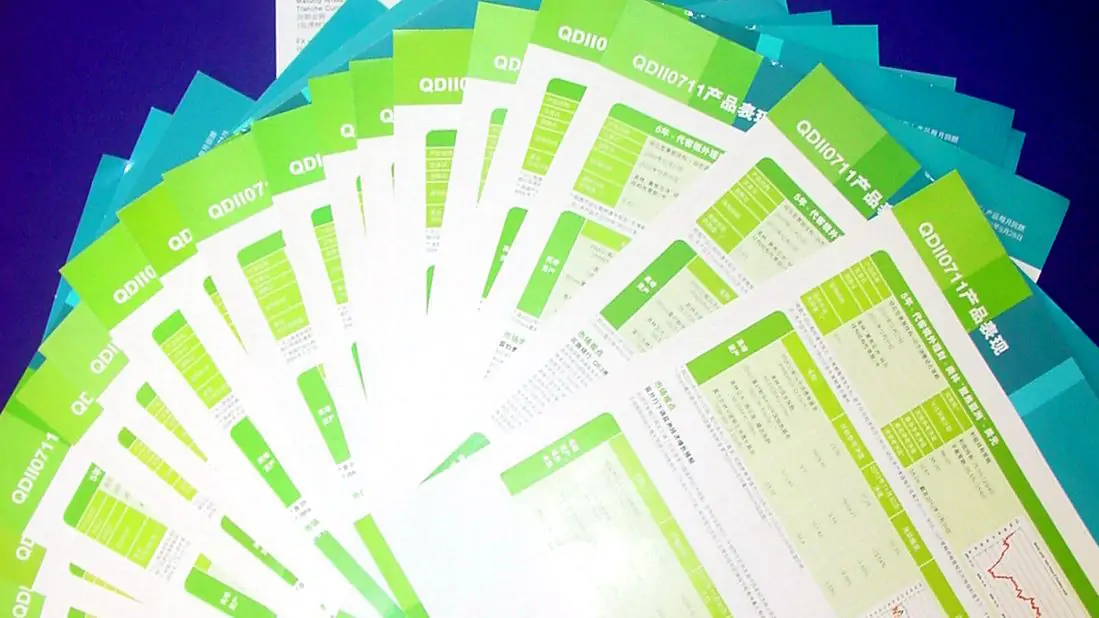
To revitalize these hard-earned assets, around 2006, I entrusted some funds to a well-known international bank for wealth management. Unfortunately, the investment results were far below expectations—several structured products suffered serious losses, especially product number QDII0711 (i.e., "Merrill Lynch Focus Asia Structured Investment No. 2 Wealth Management Plan"), which ultimately lost nearly 70%, becoming a key turning point for me to switch to independent investment.
In 2008, as the Chinese government further strengthened its regulation of cross-border capital flows, a large amount of export revenue became stuck in the overseas banking system, unable to be smoothly repatriated. Faced with the reality of millions of dollars being tied up in overseas accounts for an extended period, I was forced to shift from passive wealth management to active management, and began systematically engaging in long-term foreign exchange investment. My investment cycle is typically three to five years, focusing on fundamental drivers and macroeconomic trend judgments, rather than short-term high-frequency or scalping trading.
This fund pool not only includes my personal capital but also integrates the overseas assets of several partners engaged in export trade who also faced the problem of capital being tied up. Based on this, I also actively seek cooperation with external investors who have a long-term vision and matching risk appetite. It is important to note that I do not directly hold or manage client funds, but rather provide professional account management, strategy execution, and asset operation services by authorizing the operation of clients' trading accounts, committed to helping clients achieve steady wealth growth under strict risk control.
Foreign Exchange Manager Z-X-N's Diversified Investment Strategy System.
I. Currency Hedging Strategy: Focusing on substantial currency exchange transactions, with long-term stable returns as the core objective. This strategy uses currency swaps as the core operational vehicle, constructing a long-term investment portfolio to achieve continuous and stable returns.
II. Carry Trade Strategy: Targeting significant interest rate differences between different currency pairs, this strategy implements arbitrage operations to maximize returns. The core of the strategy lies in fully exploring and realizing the continuous profit potential brought by interest rate differentials by holding the underlying currency pair for the long term.
III. Long Terms Extremes-Based Positioning Strategy: Based on historical currency price fluctuation cycles, this strategy implements large-scale capital intervention to buy at the top or bottom when prices reach historical extreme ranges (highs or lows). By holding positions long-term and waiting for prices to return to a reasonable range or for a trend to unfold, excess returns can be realized.
IV. Crisis & News-Driven Contrarian Strategy: This strategy employs a contrarian investment framework to address extreme market conditions such as currency crises and excessive speculation in the foreign exchange market. It encompasses diverse operational models including contrarian trading strategies, trend following, and long-term position holding, leveraging the amplified profit window of market volatility to achieve significant differentiated returns.

Profit and Loss Plan Explanation for Forex Manager Z-X-N
I. Profit and Loss Distribution Mechanism.
1. Profit Distribution: The forex manager is entitled to 50% of the profits. This distribution ratio is a reasonable return on the manager's professional competence and market timing ability.
2. Loss Sharing: The forex manager is responsible for 25% of the losses. This clause aims to strengthen the manager's decision-making prudence, restrain aggressive trading behavior, and reduce the risk of excessive losses.
II. Fee Collection Rules.
The forex manager only charges a performance fee and does not charge additional management fees or trading commissions. Performance Fee Calculation Rules: After deducting the current period's profit from the previous period's loss, the performance fee is calculated based on the actual profit. Example: If the first period has a 5% loss and the second period has a 25% profit, then the difference between the current period's profit and the previous period's loss (25% - 5% = 20%) will be used as the calculation base, from which the forex manager will collect the performance fee.
III. Trading Objectives and Profit Determination Method.
1. Trading Objectives: The forex manager's core trading objective is to achieve a conservative return rate, adhering to the principle of prudent trading and not pursuing short-term windfall profits.
2. Profit Determination: The final profit amount is determined comprehensively based on the market fluctuations and actual trading results for the year.
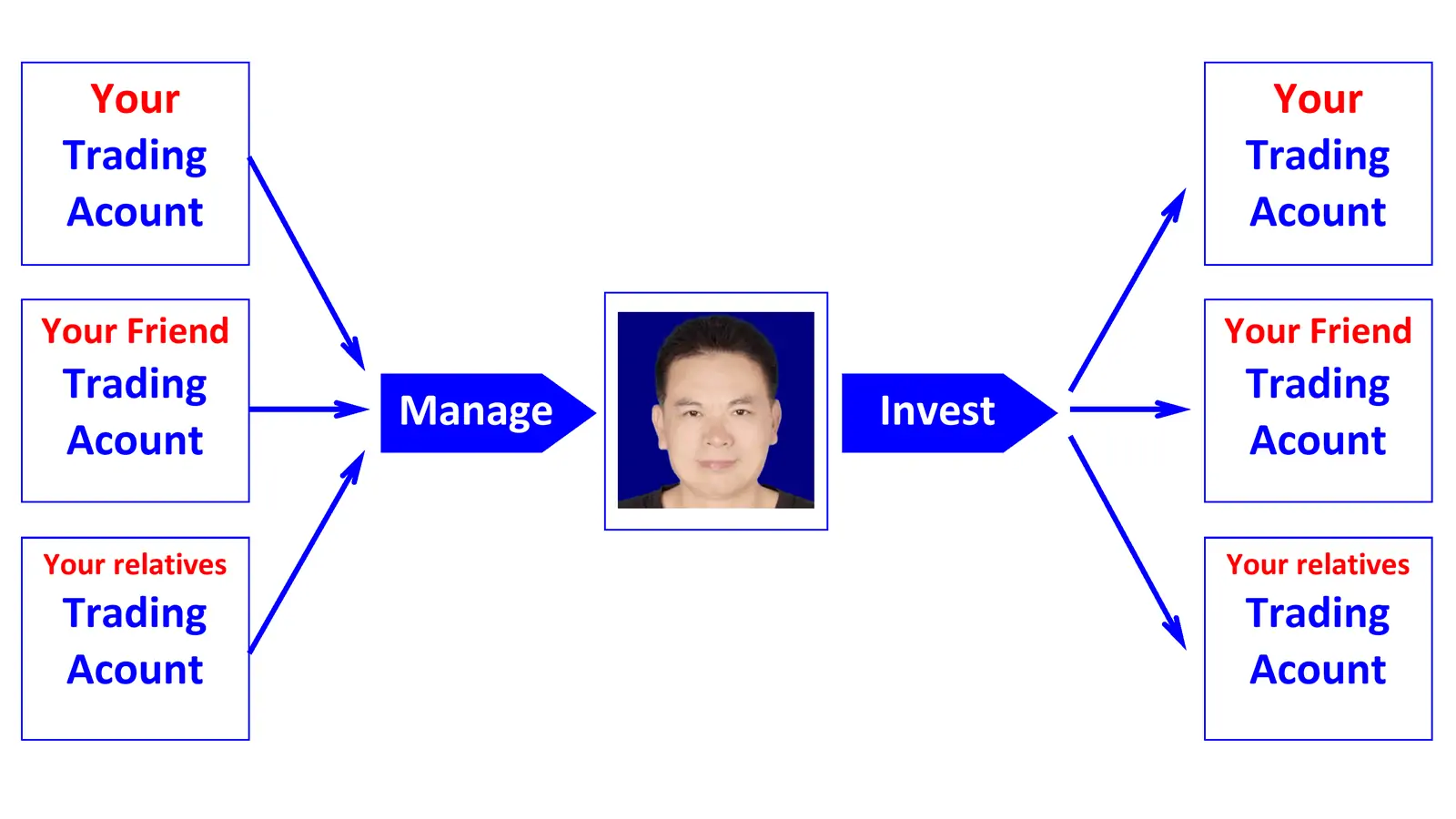
Forex Manager Z-X-N provides you with professional forex investment and trading services directly!
You directly provide your investment and trading account username and password, establishing a private direct entrustment relationship. This relationship is based on mutual trust.
Service Cooperation Model Description: After you provide your account information, I will directly conduct trading operations on your behalf. Profits will be split 50/50. If losses occur, I will bear 25% of the loss. Furthermore, you can choose or negotiate other cooperation agreement terms that conform to the principle of mutual benefit; the final decision on cooperation details rests with you.
Risk Protection Warning: Under this service model, we do not hold any of your funds; we only conduct trading operations through the account you provide, thus fundamentally avoiding the risk of fund security.
Joint Investment Trading Account Cooperation Model: You provide the funds, and I am responsible for the execution of trades, achieving professional division of labor, shared risk, and shared profits.
In this cooperation, both parties jointly open a joint trading account: you, as the investor, provide the operating capital, and I, as the trading manager, am responsible for professional investment operations. This model represents a mutually beneficial cooperative relationship established between natural persons based on full trust.
Account profit and risk arrangements are as follows: For profits, I will receive 50% as performance compensation; for losses, I will bear 25% of the losses. Specific cooperation terms can be negotiated and drafted according to your needs, and the final plan respects your decision.
During the cooperation period, all funds remain in the joint account. I only execute trading instructions and do not hold or safeguard funds, thereby completely avoiding the risk of fund security. We look forward to establishing a long-term, stable, and mutually trusting professional cooperation with you through this model.
MAM, PAMM, LAMM, POA, and other account management models primarily provide professional investment and trading services for client accounts.
MAM (Multi-Account Management), PAMM (Percentage Allocation Management), LAMM (Lot Allocation Management), and POA (Power of Attorney) are all widely supported account management structures by major international forex brokers. These models allow clients to authorize professional traders to execute investment decisions on their behalf while retaining ownership of their funds. This is a mature, transparent, and regulated form of asset management.
If you entrust your account to us for investment and trading operations, the relevant cooperation terms are as follows: Profits will be split 50/50 between both parties, and this split will be included in the formal entrustment agreement issued by the forex broker. In the event of trading losses, we will bear 25% of the loss liability. This loss liability clause is beyond the scope of a standard brokerage entrustment agreement and must be clarified in a separate private cooperation agreement signed by both parties.
During this cooperation, we are only responsible for account transaction operations and will not access your account funds. This cooperation model has eliminated fund security risks from its operational mechanism.
Introduction to Account Custody Models such as MAM, PAMM, LAMM, and POA.
Clients need to entrust a forex manager to manage their trading accounts using custody models such as MAM, PAMM, LAMM, and POA. After the entrustment takes effect, the client's account will be officially included in the management system of the corresponding custody model.
Clients included in the MAM, PAMM, LAMM, and POA custody models can only log in to their account's read-only portal and have no right to execute any trading operations. The account's trading decision-making power is exercised uniformly by the entrusted forex manager.
The entrusted client has the right to terminate the account custody at any time and can withdraw their account from the MAM, PAMM, LAMM, and POA custody system managed by the forex manager. After the account withdrawal is completed, the client will regain full operational rights to their own account and can independently carry out trading-related operations.
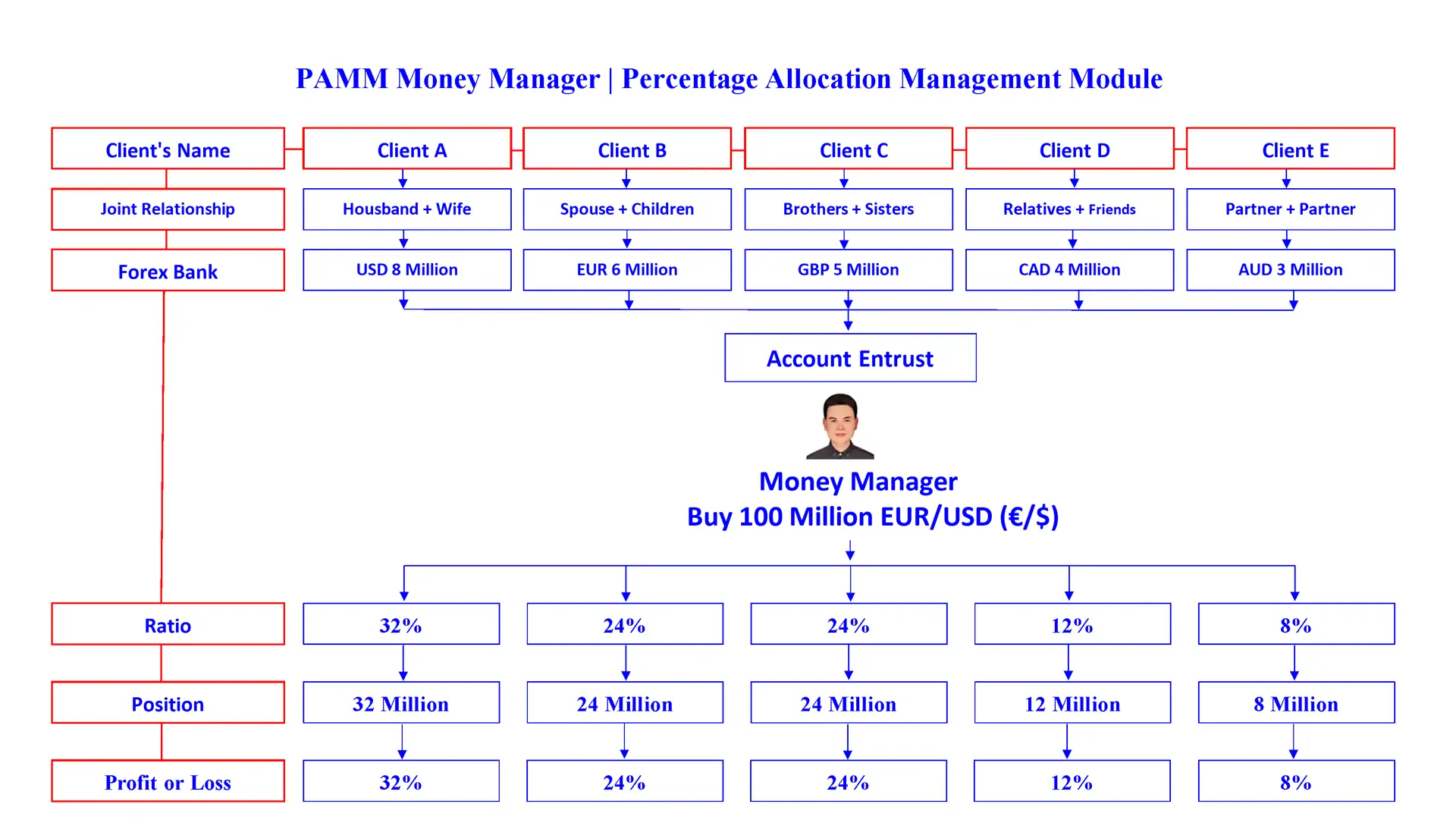
We can undertake family fund management services through account custody models such as MAM, PAMM, LAMM, and POA.
If you intend to preserve and grow your family funds through forex investment, you must first select a trustworthy broker with compliant qualifications and open a personal trading account. After the account is opened, you can sign an agency trading agreement with us through the broker, entrusting us to conduct professional trading operations on your account; profit distribution will be automatically cleared and transferred by the trading platform system you selected.
Regarding fund security, the core logic is as follows: We only have trading operation rights for your trading account and do not directly control the account funds; at the same time, we give priority to accepting joint accounts. According to the general rules of the forex banking and brokerage industry, fund transfers are limited to the account holder and are strictly prohibited from being transferred to third parties. This rule is fundamentally different from the transfer regulations of ordinary commercial banks, ensuring fund security from a systemic perspective.
Our custody services cover all models: MAM, PAMM, LAMM, and POA. There are no restrictions on the source of custody accounts; any compliant trading platform that supports the above custody models can be seamlessly integrated for management.
Regarding the initial capital size of custody accounts, we recommend the following: Trial investment should start at no less than US$50,000; formal investment should start at no less than US$500,000.
Note: Joint accounts refer to trading accounts jointly held and owned by you and your spouse, children, relatives, etc. The core advantage of this type of account is that in the event of unforeseen circumstances, any account holder can legally and compliantly exercise their right to transfer funds, ensuring the safety and controllability of account rights.

Appendix: Over Two Decades of Practical Experience | Tens of Thousands of Original Research Articles Available for Reference.
Since shifting from foreign trade manufacturing to foreign exchange investment in 2007, I have gained a deep understanding of the operating essence of the foreign exchange market and the core logic of long-term investment through over a decade of intensive self-study, massive real-world verification, and systematic review.
Now, I am publishing tens of thousands of original research articles accumulated over more than two decades, fully presenting my decision-making logic, position management, and execution discipline under various market environments, allowing clients to objectively assess the robustness of my strategies and the consistency of long-term performance.
This knowledge base also provides a high-value learning path for beginners, helping them avoid common pitfalls, shorten trial-and-error cycles, and build rational and sustainable trading capabilities.
In the forex market, long-term traders often fall into a conservative trading pattern, making the entire trading process seem tedious and monotonous. This feeling doesn't appear in the short term but gradually becomes more pronounced with extended trading cycles.
When a trader's trading system and operating rules become rigid, adhering to a single trading model without flexible adjustments, this sense of boredom intensifies. In fact, any industry's operational process, once it becomes monotonous and rigid, will produce a similar experience of monotony. This feeling may not be obvious in the early stages of a trader's journey due to novelty, but it becomes increasingly strong as trading experience accumulates.
The forex trading industry is essentially a means of livelihood, no different from other industries. It lacks the idealized halo of excessive romanticization, nor is it as fraught with negative risks as some perceive. For forex traders, the core is to clearly define their trading goals and profit expectations, abandon the mentality of greedy speculation, and clearly define the boundaries of trading opportunities they can grasp, rather than blindly chasing every potential opportunity arising from market fluctuations. This avoids trading errors due to uncontrolled opportunity selection.
In the practical growth cycle of forex trading, the trader's development exhibits a clear cyclical iterative characteristic. The early growth stage often involves repeated cycles of "self-awareness improvement – market feedback correction." That is, when traders establish the belief that their trading system is feasible and their trading skills are outstanding based on periodic profits, they are easily subject to trading losses due to sudden market trends or unexpected market fluctuations, thus shattering their original understanding. Only through repeated cycles of refinement, continuously optimizing the trading system and correcting the operational mindset, can trading skills steadily improve, truly breaking through growth bottlenecks.
The core hallmark of a successful forex two-way trader lies in establishing their own practical trading system and standardized operating rules. This involves clearly identifying and identifying opportunities that align with their trading logic, while simultaneously possessing the mindset and ability to accept the potential risks behind those opportunities and the possibility of trading losses. This is also a key difference between novice and beginner traders.
In the field of forex two-way investment and trading, many novice investors often fall into a misconception: that as long as they solve the problem of accurate market prediction, they can turn the forex market into their personal ATM.
In reality, this view ignores the complexity and uncertainty of the forex market. For beginners, excessive focus on directional prediction not only limits their perspective but also hinders their progress in actual trading, leading to misunderstandings about the nature, methods, and profit models of trading.
Different traders employ different strategies to cope with the challenges of the forex market. Some traders, after experiencing setbacks for a period, are able to think about problems from a broader market perspective, thus overcoming difficulties and building a relatively advantageous trading system. However, most beginners are eliminated from market competition because they cannot break free from their reliance on directional predictions.
In fact, successful two-way forex trading is not entirely based on accurately predicting market fluctuations, but involves a balance between probability calculations and subjective judgment with objective reality. Many traders find it difficult to accept losses, mistaking a probability-based problem for a prediction one, which undoubtedly increases the difficulty of trading. Unless one can manipulate the market—which is obviously impossible—prediction alone cannot solve the challenges of trading.
For beginners, building a relatively advantageous trading system is the path to success. Filtering trading opportunities through such a system is more conducive to consistent profitability than simply focusing on directional predictions. It's important to note that trading opportunities are not obtained by studying high and low support and resistance levels, but rather emerge naturally through waiting and filtering.
For example, many beginners tend to chase highs and sell lows, buying currency pairs that are hitting new highs because they feel these currencies are "cheaper" than before and have greater profit potential. However, a more sensible approach is to patiently wait for currency pairs that are consolidating or fluctuating, and then act when they show signs of a breakout. This approach avoids unnecessary risk while capturing truly profitable opportunities. It aligns better with the operational logic of professional traders and helps achieve long-term, stable returns.
Limitations of Classic Technical Theories in Forex Two-Way Trading and Optimization Paths for Traders' Learning Mindsets.
In the forex two-way investment market, classic technical theories serve as an important reference for traders to analyze the market and judge trends. Their core function is to provide traders with an analytical framework and logical thinking that has been validated by the market over a long period, helping them to understand the underlying patterns of forex exchange rate fluctuations. However, this also places higher demands on traders' learning mindset; correct learning, cognition, and thinking patterns often determine whether a trader can translate theory into practical trading ability.
In the practice of two-way forex trading, the limitations of classical technical theories cannot be ignored. This is primarily reflected in the correlation between entry and exit rules and profit outcomes. Although various classical technical theories clearly define specific entry and exit conditions, providing traders with operational guidelines, these conditions do not directly translate into stable profits. The very rationality of these theories as a unified trading standard in the forex market is controversial. More importantly, over-reliance on such standardized theories can solidify traders' thinking and limit their ability to flexibly analyze market fluctuations. Furthermore, the applicability of these theories is particularly prominent. The forex market is essentially a zero-sum game, and various classical technical theories that have been around for centuries often exhibit uniform standardized characteristics, lacking specificity and flexibility. They are difficult to adapt to the different cognitive levels, trading habits, and risk tolerance of traders, and naturally cannot help each trader achieve personalized profit goals.
In forex trading, especially for beginners, traders are prone to various cognitive pitfalls. The most common is the excessive pursuit of profit. Many newcomers to the forex market focus solely on generating profits, neglecting the accumulation of trading skills and the refinement of their thinking patterns. Simultaneously, many novice traders overlook the importance of independent thinking, mistakenly equating trading learning with following a uniform, standardized process. They lack independent thought and fail to recognize that trading thinking and the learning process should be flexible and autonomous, and should not be overly constrained by standardized theories.
For forex trading beginners, the correct learning approach should balance autonomy and practicality. Freedom in trading learning is not about blindly exploring at will, but rather about basing oneself on one's own cognitive level, thinking habits, and risk tolerance. It involves actively studying market dynamics, summarizing practical experience, and gradually developing a trading logic and operational methods suitable for oneself, with the actual fluctuations of the forex market as the core. In combining theoretical learning with practical application, it's crucial to adhere to the core principle of results-oriented thinking. After all, results are the sole criterion for evaluating the effectiveness of technical theories. If the learned theory is disconnected from market reality and fails to generate positive profits, it's better to abandon such ineffective learning. In reality, many traders have experienced a continuous decline in trading results due to blindly learning theories unsuitable for them. Furthermore, traders must avoid the pitfall of conformity. Many traders blindly follow the trend of using a particular technical theory simply because most people do, ignoring their own suitability and market differences, ultimately failing to achieve stable profits.
In forex trading, conformity is prevalent. Many traders tend to blindly follow the operations of the majority or the strategies advocated by so-called "trading gurus," lacking independent judgment and critical thinking, mistakenly believing that widely adopted methods must be effective.
However, actual trading results often contradict expectations. The root cause lies in a misunderstanding of technical indicators: any technical indicator is essentially a statistical summary of historical price behavior, and its effectiveness is usually limited to specific market environments or timeframes, not universally applicable to all market conditions. Over-reliance on a single indicator not only restricts a trader's perspective but can also lead to misjudgments by ignoring dynamic market changes.
Therefore, traders should regularly review their trading records, objectively examining whether the support and resistance levels they believe in truly provided an advantage in actual entry and exit decisions. From a probabilistic perspective, in forex trading, without effective access to key information and forward-looking judgment, the win rate will essentially approach 50%—this is not accidental but a natural consequence of market randomness and information asymmetry. In this context, a shift in trading mindset is urgently needed: one should not fall into the trap of "replacing old techniques with more advanced ones," because simple technical iteration cannot overcome the inherent limitations of technical analysis itself. The real breakthrough lies in stepping outside the technical realm and reconstructing trading logic from the dimensions of probability distribution, expected value, and risk control.
When traders truly accept the premise that trading is essentially a probabilistic game, their focus should shift to risk management and optimizing the risk-reward ratio. Furthermore, their understanding of trading tools needs to be deepened: tools such as candlestick charts and moving averages should not be seen merely as sources of predictive signals, but rather returned to their original purpose—as tools for objectively measuring market sentiment, supply and demand, and price structure, serving systematic trading decisions based on probability and discipline.
In the forex two-way investment market, there are significant differences between traders at different levels (novice and experienced traders). These differences are particularly evident in their perception and attitude towards luck. Traders will experience periods of favorable trading conditions in actual trading, and behind this so-called "luck" lies, in essence, the precise matching of trading rules, trading systems, and market conditions.
In forex trading, novice and experienced traders have drastically different attitudes towards luck. Novice traders often deliberately avoid mentioning that their profits are due to luck. When disagreements arise with other traders, they are quick to argue about the merits of their own trading views and techniques, attempting to prove the correctness of their trading logic. Experienced traders, on the other hand, are more rational. They don't blindly believe their trading techniques or philosophies are superior to others. They objectively acknowledge that luck may have played a role in their high returns at a certain stage, and clearly recognize that such high returns are unsustainable. They avoid falling into the trap of arrogance or blindly replicating past trades.
In the actual operation of two-way forex trading, traders often encounter periods of exceptionally smooth trading, manifested as immediate profits upon opening positions and a near 100% win rate when trading trending trends. However, it's crucial to understand that such extreme success is merely a temporary phenomenon. In the long run, influenced by the uncertainties of forex market exchange rate fluctuations, macroeconomic factors, geopolitical factors, and other variables, the win rate cannot be sustained at this level. Ultimately, long-term trading results will come down to the trader's own trading skills and the stability of their trading system.
Further analysis of the essence of "luck" in two-way forex trading reveals that, on the surface, a trader's profits may seem to involve luck. However, the core reason is that their trading rules and systems happen to perfectly align with the current market conditions. There is a close intrinsic connection between luck and trading rules, primarily manifested in two dimensions: from the trader's perspective, each trader has their own established trading rules, clearly defining the types of market conditions they want to capture, entry and exit signals, and profit targets, forming a trading logic that conforms to their own trading habits and risk tolerance. From the market perspective, when the forex market moves in the direction the trader has predicted, precisely matching the tradable conditions defined in their trading rules, the market will reward the trader accordingly. This seemingly "luck" result is actually the inevitable product of the precise matching between the trading system and market conditions, and also the result of the trader's long-term adherence to their own trading rules and continuous optimization of the trading system.
In forex trading, expert growth often stems from profound insights, and the path to mastery is not linear but a spiraling ascent.
Most traders, from market novices to consistently profitable professionals, must undergo repeated trials of profit and loss, constantly peeling back the layers of appearances to grasp the essence, thereby truly understanding the market's operating logic and the core principles of trading.
As their cognitive level improves, they develop entirely new understandings of trading at different stages, even completely overturning their previous strategies and beliefs. This iterative cognitive development is not instantaneous but gradually completed through the interaction of market feedback and self-reflection.
Many seasoned traders, when reflecting on their key breakthroughs, often mention realizing forex trading is not merely about price movements, but more importantly, about seizing trading opportunities—for example, identifying currency pairs in a low-price range after a continuous decline or a high-price range after a continuous rise, thus making informed long/short decisions in high-probability scenarios.
This cognitive leap from "looking at prices" to "judging timing" is often a crucial turning point in achieving stable profits, marking a fundamental shift in trading thinking from mechanical reactions to strategic judgment.
In the forex two-way investment trading market, a book that focuses entirely on profits and exaggerates their effects cannot actually be considered essential professional investment reading for qualified forex traders.
In forex two-way investment trading practice, traders need a clear understanding of the criteria for judging good forex trading books, the differences in advantages and disadvantages of various trading methods, and, more importantly, be wary of common misconceptions found in forex trading books.
One of the most typical pitfalls is the one-sided promotion of profits. Many forex trading books simply teach so-called "profit-making techniques," and the case studies in these books deliberately select market conditions that perfectly demonstrate profit-making effects, while ignoring the randomness and uncertainty of the forex market, which is influenced by multiple factors such as macroeconomics, geopolitics, and exchange rate fluctuations. Traders who blindly follow the methods in these books often find themselves in a situation where profits fall short of expectations. Another misconception is the deliberate concealment of the side effects of trading methods. These books only present the profitable scenarios of the trading methods in a one-sided way, without clearly informing traders that any forex trading theory or practical method has corresponding limitations and side effects. This easily leads readers to fall into the cognitive trap of "what you learn is the whole truth," and consequently, they lack the ability to predict risks in actual trading.
In forex trading, promotional materials for short-term trading are often misleading. Many books and training courses on short-term trading overemphasize the high win rate of their methods while deliberately ignoring the crucial profit/loss ratio. This approach easily leads novice forex traders to mistakenly believe that "win rate is king," neglecting the decisive impact of the profit/loss ratio on overall trading returns. Ultimately, they waste significant time, energy, and trading capital in blindly pursuing high win rates.
Compared to short-term trading, long-term forex trading has distinct characteristics. Its core feature is the coexistence of a high profit/loss ratio and a low win rate. Many books on long-term trading focus only on depicting the ease and profits of successful traders, ignoring the fact that forex trading is essentially a game where "a few profit, most lose"—a classic "loser's game." If readers fail to clearly understand the side effects of long-term trading methods, they cannot establish reasonable risk expectations and maintain a stable trading mindset in volatile markets.
Furthermore, in forex trading, there is a close relationship between trading psychology and trading methods. Many traders attribute poor trading psychology to their own mindset, but this is not the case. Some psychological problems stem from inappropriate trading method selection. If traders can fully anticipate the worst-case scenario before choosing a trading method and prepare accordingly, their trading psychology and execution will significantly improve. Even experienced traders can experience emotional fluctuations and decision-making errors if they cannot clearly predict the extent of loss when opening a position.
It is important to clarify that there are no absolutely good or bad trading methods in forex trading, nor is there a single method suitable for all types of traders. Therefore, the key to choosing a trading method is not to pursue the "optimal method," but rather to comprehensively and objectively understand the advantages and disadvantages of various methods, identify their potential side effects, and, based on their own risk tolerance, trading habits, and capital size, determine whether the side effects of the method are within their acceptable range. Only then can they choose the most suitable trading method to achieve long-term, stable trading returns.
In forex trading, many traders encounter the dilemma of "adding to winning positions only to lose everything in one go." The root cause often lies in the inappropriate timing and price level of adding to positions.
Many traders, after seeing others profit by adding to positions, attempt to imitate this strategy, only to find themselves not only failing to replicate success but also eroding or even completely giving back their original profits. This repeated frustration can easily lead to psychological instability, causing traders to doubt the strategy itself and fall into either the extremes of being afraid to add to positions or blindly adding to them.
In essence, the forex market is highly random and unpredictable. Each trade—whether the initial position or subsequent additions—is essentially an independent event, with no necessary causal relationship between them. However, this does not mean that adding to positions lacks a logical basis. From a probabilistic perspective, rationally adding to a position based on existing unrealized profits can theoretically improve the overall win rate of the position. From a cost perspective, if we acknowledge that the market spends most of its time in a directionless oscillation, then adding to positions during pullbacks or rebounds at more cost-effective points helps optimize the average cost of holding the position. Conversely, adding to positions at temporary highs or lows can significantly raise or lower the overall cost basis, dragging a trade that could have broken even or even made a small profit into a larger loss.
Therefore, adding to a position is not simply about increasing position size, but a systematic decision that requires consideration of market structure, risk control, and psychological discipline. The real challenge for traders often lies not in technical judgment, but in overcoming greed and fear when facing unrealized profits, and executing a proven adding-to-position strategy with rational and consistent logic.
In the forex market, most traders generally suffer from a psychological cognitive bias, subjectively perceiving that making a profit is significantly more difficult than incurring a loss.
This cognitive bias manifests in actual trading as follows: many traders intuitively feel that earning a profit target of $200 often requires significant time and effort and is difficult to achieve, while losing $200 often occurs in a short period. In fact, many traders who initially set a profit target of only $200 end up losing far more than that amount.
The core cause of this phenomenon lies in the profound impact of the anchoring effect in forex trading. Most forex traders use a $200 profit target as their core psychological anchor. This anchor continuously interferes with their psychological activities and decision-making during trading, leading to erratic trading behavior. When account profits approach the preset $200 target, traders are prone to excessive psychological pressure, choosing to close positions prematurely out of fear of profit retracement, ultimately missing out on potential future profits. Conversely, when profits fall short of the $200 target, if the account incurs losses, traders, unwilling to accept the shortfall and eager to make up for the gap, choose to hold onto losing positions, ignoring market trend changes and risk management, ultimately causing losses to continue to expand, far exceeding the initial $200 expectation. Furthermore, accounts with daily profit as their core trading goal, while achieving small profits on most trading days, often experience relatively large losses on losing days. Moreover, some profits are not based on sound trading logic but rather on irrational position-holding, making it difficult to achieve stable profitability in the long run.
Besides the anchoring effect of profit targets, the cost basis is also a crucial anchor point for forex traders' exit decisions, especially when the account is in a losing position. This anchoring effect is even more pronounced then. Many novice traders tend to use "breaking even without loss" as their core exit criterion, rather than relying on professional tools such as candlestick charts and technical indicators to identify market breakout points and set reasonable stop-loss levels. This irrational exit decision can easily lead to traders getting deeply trapped in trending markets, with losses continuously escalating.
To mitigate the negative impact of the anchoring effect in forex two-way trading, traders can alleviate and avoid it through scientific methods. In daily life, they should focus on horizontal comparisons, rationally assess their own trading skills and profitability, and reduce psychological imbalance caused by excessive vertical self-comparison. In practical trading, the core is to build a sound trend-following trading system and scientific trading logic, resolutely blocking unverified rumors and market noise. Utilizing the positive contradictory information within the trading system can offset the interference from market price fluctuations and divergent bullish/bearish news, thereby shifting excessive focus from anchor points such as profit targets and holding costs, achieving rational trading and stable profits.
In the field of forex two-way investment trading, forex investment is essentially a loser's game.
For novice investors, with $200,000 in forex trading, a daily loss of more than $300 can cause anxiety and sleepless nights. However, for experienced traders, a daily loss of only $300 might be considered lucky. Therefore, before starting forex trading, it's crucial to ensure your trading capital is sufficient to withstand losses; it shouldn't be urgently needed funds or obtained through debt. Even if you are financially capable of accepting losses, if you psychologically feel unable to bear them, it indicates your risk awareness and psychological tolerance are unsuitable for trading, and you should consider exiting the market.
Forex trading is essentially a pure risk management and zero-sum game; there are no intrinsically valuable chips. A trade can occur simply because there is a difference of opinion. The outcome is inevitably one side profits while the other loses, and market trends affect forex investors both in a trending and counter-trend manner. For forex investors, losses are an unavoidable norm; regardless of whether your operations are correct or not, small losses and large gains are the way to survive. Reflecting on losses becomes an important learning opportunity, as losses are an unavoidable part of trading, and learning how to handle losses is a lesson every trader must master.
Continuous participation in forex trading requires not only focusing on profitability but also considering how to handle losses and your personal psychological reactions. When market conditions are favorable, most traders can profit; however, when market conditions are unfavorable, it tests who can withstand the pressure. For forex investors, the relationship between learning and loss is crucial. If losing a substantial amount of capital, even just $300, causes sleepless nights, it's difficult to seriously learn trading skills with that mindset. The correct approach is to accept that losses are an integral part of the learning process; striving to learn without losing, or even to profit, is unrealistic. If you cannot accept losses as part of learning, then you shouldn't be involved in the forex market.
In the field of two-way forex trading, most traders face the challenge of learning trading techniques effectively. Behind this phenomenon often lie several easily overlooked core factors.
In two-way forex trading, the uncertainty of trading outcomes is the primary contributing factor. Incorrect trading behavior does not necessarily lead to losses. Even if a trader uses irrational trading logic, unscientific operating methods, or even relies entirely on algorithmic trading, some of their trades may still be profitable. Such accidental profits can easily mislead a trader's judgment of their own trading system. Conversely, even if a trader follows scientific trading logic, adheres to rigorous trading principles, and executes correct trading operations, some of their trades may still result in losses, even leading to a series of losses. This situation severely challenges a trader's confidence in their own trading strategy, thereby affecting the stability of their trading mentality. Meanwhile, the misleading consequences of holding onto losing positions cannot be ignored. In actual trading, some trapped orders, if held long enough until the losses end, can often be recovered or even profitable. This accidental phenomenon makes it difficult for traders to clearly define the boundaries of right and wrong in their trading operations, especially for novice traders, who are prone to cognitive confusion and unable to establish correct trading judgment criteria.
Besides the uncertainty of trading results, common trading misconceptions among novice traders in forex two-way investment trading are also a significant reason for the increased learning difficulty. Novice traders are prone to serious doubts about stop-loss orders. Because the logic of not using stop-loss orders aligns more with the human tendency to gamble, many novices, in the early stages of building their own trading system, often question the importance of stop-loss orders, thus spending a lot of time researching unreasonable methods that avoid deep losses without stop-loss orders. This undoubtedly wastes their golden learning period in the early stages of their career and delays the establishment and improvement of their trading system. In terms of trading expectations, novice traders often fall into cognitive biases, frequently asking how long it will take to achieve consistent profitability after entering the market. They are eager to quickly reach their profit goals in the forex market, and this get-rich-quick mentality leads them to ignore the gradual nature of trading learning, making it difficult to calmly hone their trading skills and accumulate experience. In terms of trading mindset, novice traders face greater challenges in shifting their approach. If they can move beyond the limitations of purely technical analysis in their first year or two of learning, establishing a scientific probabilistic trading mindset and recognizing that the essence of forex trading profitability lies in the accumulation of long-term probabilistic advantages, rather than the outcome of a single trade, their trading understanding will far surpass that of other novices entering the market at the same time.
Furthermore, novice traders' misunderstandings about "trading enlightenment" in two-way forex investment further increase the difficulty of learning to trade. Many novice traders mystify the concepts of trading enlightenment and "simplicity is the ultimate sophistication," viewing them as unfathomable and unattainable realms. They overlook the core essence of trading enlightenment—it's not about mastering some mysterious trading technique, but rather about gradually confirming and firmly implementing correct trading logic and methods after sufficient trading practice and accumulating enough profit and loss experience, moving beyond initial doubt and trial and error. Essentially, it's a process of breaking through cognitive biases and returning to the essence of trading. Its core lies in the accumulation and summarization of long-term practice, not in sudden enlightenment.
To address the aforementioned issues, novice forex traders need to grasp two core points during their learning process: First, develop a long-term trading plan. Forex trading is a gradual and continuous learning process, far more challenging than other investment fields. Before entering the forex market, be prepared for long-term commitment, ensuring you remain in the market to experience market fluctuations and accumulate trading experience. This real-world market experience is irreplaceable by simulated trading and forms the foundation for building a mature trading system. Second, avoid blindly over-leveraging. Do not harbor the illusion that "repeatedly over-leveraging will consistently yield high returns." While over-leveraging may bring high single profits, it also amplifies trading risks, easily leading to significant losses. This violates the core principle of forex trading: "steady profits and long-term survival." Reasonable position control and adherence to risk management are crucial for long-term success in the forex market.
In forex trading, the trader's mental stability is paramount, yet the human element is precisely the weakest link in the entire trading system.
There is a mutually reinforcing relationship between trading and emotions: it's difficult to discern whether emotions amplify trading behavior or whether trading results, in turn, exacerbate emotional fluctuations.
Extensive practice shows that emotions have a significant impact on trading results—the more emotional one is, the worse their trading performance tends to be, and the more likely they are to find themselves struggling passively in the market; conversely, when traders are focused and natural, they are more likely to make rational decisions and achieve good results. Therefore, the core key to achieving stable trading lies in emotional stability. The final and most crucial step in improving the consistency and reliability of trading is to establish and maintain good emotional control.
From a technical perspective, the differences between mainstream trading methods are not significant in the initial stages. Basic technical indicators such as highs, lows, golden crosses, and death crosses all have clear objective definitions, and the differences produced by different traders using the same strategy are usually small. Even with minor parameter adjustments, the overall performance largely converges after extending the time frame or increasing the sample size.
What truly causes the divergence in trading results is not the technology itself, but the highly subjective factor of the trader's emotions. Emotions are easily influenced by external factors, such as account profit/loss status and comparisons with other traders, which can subtly affect judgment.
More importantly, emotional stability directly determines the quality of trade execution: even if an ideal entry point is identified, emotional imbalance leading to lax discipline and distorted operations can still result in missed profit opportunities or even a reversal of profit into loss. Therefore, in forex trading, technical skills are the skeleton, while emotional management is the flesh and blood that determines success or failure.
In the two-way forex market, most investors generally lack risk awareness and mindset commensurate with their trading risk tolerance, which is a significant contributing factor to their trading failures.
For forex trading novices, after the initial one to four-month adaptation period, they often enter a plateau in trading profits and losses, namely a period of stable losses. This phenomenon is particularly common among retail investors.
As the main participants in the foreign exchange market, retail investors are essentially passive followers of market trends. However, market fluctuations are fundamentally a process of risk transfer; only when effective risk transfer is completed can a clear market trend emerge. Retail investors frequently engage in trading behaviors that contradict the mainstream market trend. This is influenced by objective factors such as the interplay of bullish and bearish forces and the rhythm of market fluctuations, as well as subjective factors closely related to investors' own unbalanced trading psychology, such as greed and fear.
It's important to clarify that forex trading techniques are inherently subjective; as the saying goes, "a thousand people, a thousand waves; a thousand people, a thousand methods." There is no absolutely unified and universally applicable trading technique system. Win rate performance is significantly dependent on market conditions—a particular trading technique may demonstrate a high win rate in a specific market cycle, while performing poorly in another. The core factor is the inherent volatility characteristics and operational logic of the market itself. More importantly, it's crucial to understand the fundamental relationship between market conditions and technical analysis. Market conditions are the cause, and technical analysis is the effect. Technical analysis is always a summary and adaptation of existing market conditions, not an absolute basis for predicting future trends. Investors must abandon the misconception of prioritizing technical analysis and avoid falling into the trap of over-reliance on technical indicators while ignoring the true nature of market conditions.
Furthermore, in forex two-way trading, the core of trading is not simply proficiency in trading techniques, but rather building a robust trading system with a positive profit-loss ratio and a high win rate, coupled with a scientific money management strategy, and maintaining a stable and rational trading mindset. From a probabilistic perspective, even if an investor lacks solid trading skills, their occasional correct subjective judgment is merely a matter of probability and cannot form a sustainable profit model. Only by balancing a trading system, money management, and trading mindset can one achieve stable returns with controllable risk in long-term forex trading.
In the field of forex two-way investment trading, investors must fully recognize the potential risks of not being psychologically prepared for losses.
When trading forex, whether facing profits or losses, one must have the corresponding psychological preparation and resilience. Just as a mentor needs to be prepared for the challenge of repeated explanations of knowledge and overcome the so-called "curse of knowledge," forex traders should ensure that they have mentally prepared for all possible situations before entering the market.
Successful forex trading relies not only on technical analysis and money management strategies, but also on investors comprehensively assessing potential risks before each position and only trading at a level they can handle. Furthermore, maintaining a stable and healthy trading mindset is crucial. While a single instance of good mindset may not immediately demonstrate its importance, a single moment of mental imbalance can wipe out long-term efforts. Therefore, traders need to consistently hold themselves to high standards to maintain a sound trading mindset.
It's worth noting that the idea that avoiding greed alone can achieve consistent daily profits reflects a lack of understanding of forex trading risks. In reality, every profit comes with corresponding risk. This misconception hinders investors from pursuing greater profits and can lead to irrational "holding on" behavior when facing losses, indicating a lack of psychological preparedness to accept losses.
In short, before starting forex trading, the key is to thoroughly understand and manage risk. A clear risk management strategy should be established upon entry; otherwise, one should not enter the market lightly. This is not only the foundation of successful trading but also a vital measure to ensure capital safety.
In the forex two-way investment trading market, it is crucial for novice traders to receive guidance from experienced professionals during the initial learning phase.
This effectively shortens the learning cycle and reduces trial-and-error costs. In particular, the precise guidance from experienced traders helps beginners quickly clarify trading logic, thoroughly understand market patterns, and avoid falling into the cognitive trap of "half-understanding," achieving a rapid breakthrough in trading knowledge.
For forex two-way investment trading, the core value of leveraging others' experience lies in the efficient reuse of mature trading logic. Experienced traders, based on their own practical experience, can directly and clearly define practical techniques and judgment methods suitable for the current market environment and trading instruments. This helps beginners skip the stage of blind exploration, significantly improving their learning efficiency. The cognitive improvement brought about by this experience-based guidance is often difficult for beginners to achieve quickly through self-study, enabling them to achieve a thorough understanding of the core trading logic in a short period.
It is particularly important to note that forex trading is inherently highly volatile and risky. The loss rate and attrition rate among market traders remain high. Newcomers who rely solely on self-exploration will not only waste a significant amount of time but are also prone to severe losses due to misjudging market trends and applying inappropriate trading strategies. If their capital reserves are insufficient, they are easily swayed by continuous losses, making it difficult to maintain a long-term presence in the market. The core reason for the industry's high attrition rate and low win rate is that many newcomers, before mastering mature trading skills and developing a stable trading system, are forced to exit the trading market due to substantial losses from prolonged trial and error, depletion of their capital, or psychological imbalance.
Therefore, novice forex traders need to focus on several key points in the initial trading stage. The most crucial is to seek guidance from reliable, experienced traders to mitigate common risks in the introductory phase. If guidance is unavailable or you prefer not to rely on others, strictly control your initial investment, avoiding investing all your capital. Given the high volatility of the forex market, smaller initial investments reduce the risk of failure and facilitate a smoother market adaptation. Simultaneously, beginners should prioritize loss control. Before identifying the root causes of losses and mastering effective risk management methods, minimize losses, slow down the trading pace, and participate in live trading with small amounts of capital to gradually accumulate market awareness and practical experience. Furthermore, beginners must avoid the misconception of being "eager for quick results." The core logic and market rules of forex trading require long-term live trading experience to grasp accurately. Blindly pursuing stable profits in the short term can easily lead to trading pitfalls, increasing the risk of losses and negatively impacting long-term trading mindset.
In forex trading, to truly succeed, traders need more than just technical analysis tools; they need a deep understanding of the psychology and behavioral logic of market participants.
Trading, on the surface, is about interacting with prices and charts, but in essence, it's a game of strategy against others—every trade reflects the clash of expectations, judgments, and strategies among different market participants. Therefore, successful traders must learn to understand others' thoughts, discern group sentiment, and form independent judgments based on this understanding. Simply relying on readily available technical indicators often fails to provide a sustained advantage because technical analysis is merely a summary of historical price behavior; its effectiveness rests on the assumption that "history repeats itself," but it cannot explain the deeper motivations behind price movements.
Many traders often view trading as a solitary journey, but this "solitude" stems more from individual perception than from market reality. The market itself is always interactive: even if you don't actively study others, other participants are constantly analyzing your behavioral patterns. Especially in the modern foreign exchange market, dominated by high-frequency trading, algorithms, and institutional investors, the competition among various types of capital is particularly fierce. Large funds vie for liquidity and pricing power, while smaller funds attempt to seize opportunities in the gaps. Furthermore, a natural asymmetry in information, resources, and strategies exists between large and small funds, creating a de facto "enemy" relationship.
Newcomers to the market often tend to focus their energy on optimizing technical indicators, attempting to improve their win rate by precisely fitting historical data. However, this approach easily falls into the trap of "overfitting," where the model performs exceptionally well on historical data but fails in live trading. The reason for this lies in ignoring the essence of trading techniques: they are not deterministic tools for predicting the future, but rather empirical descriptions of the probability distribution of market behavior. Truly effective trading ability lies not only in mastering techniques but also in understanding the market structure, participant motivations, and the logic of capital flows behind those techniques.
In the field of two-way forex trading, it is crucial to clearly define the core concepts, trading principles, and professional understanding of special market conditions involved in forex trading education.
The core principle of forex trading education lies in prioritizing experience over results. In the introductory stage of trading education, a trader's own practical experience is far more important than a single trading result. This is because initial experience forms the core foundation for accumulating trading expertise and refining trading logic, while short-term results are often influenced by market fluctuations and other accidental factors, lacking long-term reference value. Simultaneously, in the introductory stage, the process of validating trading logic and strategies is far more important than directly drawing conclusions. Only through repeated verification can one develop trading knowledge that aligns with their own abilities and adapts to the market, avoiding blindly applying ready-made conclusions and falling into trading pitfalls.
In the foreign exchange trading education market, the core principle for long-term development and success is to focus on the essence of the foreign exchange market and prioritize long-term survival. Only through long-term market participation, understanding market fluctuation patterns, and accumulating market experience can one gradually align their educational output with market demands, thereby forming a core competitive advantage in the education field.
Furthermore, in two-way foreign exchange trading, traders must adhere to clear trading principles. In the initial stages of trading, the most fundamental and core principle is to liquidate positions. By using small positions for trial and error, initial trading risks are reduced. Simultaneously, as market understanding deepens and trading knowledge accumulates, traders' trading decisions gradually align with market patterns and become more rational and correct.
In terms of market understanding, traders must resolutely avoid cognitive inflated egos and abandon subjective judgments based on assumptions. They must recognize that rational market understanding is the inevitable result of long-term market participation and continuous review and analysis. As traders experience more unexpected market conditions and unusual fluctuations, their respect for the market will gradually increase, enabling them to adhere to the core principle of "not substituting subjective opinions for market facts." They will consistently approach various forex market fluctuations with an objective and rational attitude, avoiding trading risks caused by cognitive biases.
In two-way forex trading, a trader's psychological evolution typically progresses from blind confidence to psychological collapse, then gradually towards conditional confidence, and finally to unconditional confidence—a complete process.
Initial blind confidence essentially stems from the cognitive blind spot of "not knowing what one doesn't know." Novices often mistakenly believe they have mastered market dynamics after only reviewing historical market data or completing a small number of simulated trades. Their confidence is not based on an understanding of the essence of trading, but rather driven by confirmation bias and the illusion of results. At this stage, traders haven't yet realized the psychological resilience, risk control capabilities, and systematic thinking necessary for real trading. Faced with the uncertainty and profit/loss outcomes of live trading, they struggle to maintain emotional stability and objective judgment.
Furthermore, overconfidence at this stage is often reinforced by horizontal comparisons with less experienced traders or minor success stories, masking deeper deficiencies in their trading systems, market understanding, and behavioral discipline.
More alarmingly, many traders at this stage mistakenly believe technical analysis is a "magic key" to predicting the market, confusing superficial signals with underlying logic and ignoring the limited role technical tools play in the overall trading system. What truly determines long-term performance is the development of comprehensive capabilities, including money management, risk control, market understanding, and psychological adjustment.
In the two-way forex market, the distinction between investment and speculation remains a core concern for traders.
While both are market operations, they differ fundamentally in their core logic, risk tolerance, and operational strategies. The core criterion for judging whether a trader's actions fall under the category of investment or speculation is singular: their tolerance for and response to trading drawdowns. This criterion is not subjective conjecture but a practical principle validated by the market over a long period. It applies not only to the qualitative analysis of overall trading behavior but also to the essential boundary distinguishing long-term investment from short-term trading.
From the core logic of forex investment, true investment does not pursue short-term market fluctuations for price difference gains. Instead, it is based on a deep analysis of long-term exchange rate trends and macroeconomic fundamentals (such as national interest rate policies, inflation levels, and trade balance) to earn stable returns from long-term trends. Based on this logic, investors maintain a very high tolerance for normal market drawdowns because they understand that the forex market is influenced by multiple factors, and short-term drawdowns are an inevitable phenomenon in the trend process, not a signal of trend reversal. On the contrary, they will regard such reasonable drawdowns as a positive signal.
Compared to speculators' panic selling and blind stop-loss orders during pullbacks, forex investors might even feel fortunate about reasonable pullbacks. The core reason is that pullbacks present a more cost-effective opportunity to add to positions. Within pre-defined investment logic and risk control limits, the exchange rate after a pullback will be closer to the investor's expected holding cost. Adding to positions at this point not only lowers the overall holding cost but also allows for higher returns when the long-term trend reverts. This is the most intuitive and core difference between forex investment and speculation in practical terms, and a key benchmark for verifying the essence of a trader's operations.
In two-way forex trading, traders commonly experience a degree of inferiority complex, which is perfectly normal.
Many successful forex traders have also fallen into this trap, not because of a lack of knowledge, common sense, experience, or skills—even if these elements are already highly proficient—but because of insufficient capital.
In the real market environment, even the most sophisticated trading skills are difficult to translate into sustainable returns, let alone achieve financial freedom, without a corresponding financial foundation. A weak account balance often limits a trader's operational space, risk tolerance, and compounding potential, making it difficult to execute strategies confidently even with sound judgment.
In fact, for the vast majority of traders, about 90% of feelings of inferiority stem from limited capital. Once a sufficiently robust capital base is established, psychological insecurity is significantly alleviated. Therefore, instead of indulging in various psychological adjustment techniques or vague theories of "overcoming inferiority" online, it's better to focus on practical paths to capital accumulation.
Only by solidifying the capital base can one truly overcome psychological difficulties and establish a sustained and confident trading style in the forex market.
In the two-way foreign exchange market, investors balancing their primary job with forex trading has become the mainstream participation model.
For ordinary families, compared to traditional investment categories, forex investment has a significant advantage in terms of entry barriers, requiring no excessive initial capital to participate in market trading.
We should view forex investment rationally, abandoning the preconceived notion of "fearing forex" and avoiding it blindly due to a one-sided understanding of its risks. In fact, while ordinary investors cannot directly invest in large, leading companies to share in their growth dividends, they can participate in global asset allocation through the convenient channel of forex trading, achieving flexible investment with small amounts of capital.
Furthermore, in the two-way forex trading scenario, if investors possess the corresponding market knowledge and operational conditions, they can actively explore this relatively niche investment area. Due to relatively low market participation and less competitive pressure, this area provides investors with a more relaxed trading environment and more flexible operational space, helping them better seize market opportunities.
In forex trading, traders should not fear failure. On the contrary, they should face failure with rationality and courage, because failure is an indispensable path to accumulating practical experience.
Only by personally experiencing losses and setbacks can traders deeply understand the logic of market operation, the essence of risk control, and the shortcomings of their own strategies, thereby continuously optimizing their trading system.
In this sense, failure is not the end, but a necessary stage on the road to success—each failure brings traders closer to the tipping point of profitability. This is why many experienced angel investors even prefer to support entrepreneurs or traders who have experienced failure.
The underlying logic is that those who have failed often cherish opportunities more, possess stronger risk awareness and execution capabilities, and have accumulated a wealth of valuable experience "approaching success" through practice; what they usually lack is no longer knowledge or methods, but simply the capital support needed to restart.
Therefore, in the foreign exchange market, failure should not be seen as shame, but rather as a valuable learning experience and a stepping stone to future success.
In the two-way foreign exchange market, the randomness of exchange rate fluctuations, the flexibility of switching between long and short positions, and the risks of leveraged trading mean that a trader's exceptional execution ability is not only their core competitive advantage but also a key factor determining the upper limit of their trading career.
In this highly specialized investment field, what truly differentiates traders is never talent or intelligence, but rather the exceptional execution ability to translate trading logic and strategic planning into concrete practice. Most forex traders' losses stem not from a lack of market understanding, but from being overwhelmed by the superior execution of their peers. Those traders who seem intelligent and accurately predict market trends, if lacking the ability to implement their strategies, will ultimately only miss profit opportunities while admiring their own success. Only exceptional execution can truly transform an advantage in understanding exchange rate trends, money management, and risk control into tangible trading results. This is the core value of execution in two-way forex trading.
In the context of two-way forex trading, the essence of a trader's ultimate execution is not simply "action," but rather the ability to initiate a trading process according to a pre-set strategy even when the market is sluggish, their own state is poor, or they even feel resistant to trading. It's crucial to understand that in forex trading, action itself activates the trading state, rather than passively acting only when emotions are running high or the market is clear. Furthermore, execution is also reflected in adhering to trading discipline and sticking to the established strategy even when the market is in a prolonged period of consolidation, short-term profits are not visible, or even small floating losses occur. This persistence is not passively supported by short-term profit incentives, but actively driven by a scientific trading structure and a comprehensive strategy system. It also requires maintaining rationality and steadily advancing each trading step when emotional fluctuations occur due to sharp market shifts, external market rumors cause interference, or one's own understanding of the trading strategy wavers; avoiding blindly adding or reducing positions, and refraining from arbitrarily changing the trading plan.
In the long-term competition of forex trading, exceptional execution has an irreplaceable advantage over talent. The true competition in the market is essentially a competition of compound interest over time. While exceptionally talented traders may achieve short-term profit bursts through a keen sense of market trends, this advantage is often unsustainable. Furthermore, such traders are prone to fleeting enthusiasm, anxiety due to market fluctuations, and frequent changes in trading direction and strategies. Forex traders with exceptional execution, however, do not need to rush to prove themselves. Once they choose a strategy that aligns with market principles and suits their trading style, they adhere to it consistently and execute it relentlessly, accumulating compound returns through standardized daily operations, gradually widening the gap between themselves and other traders.
For forex traders, the key to exceptional execution lies in building a robust trading execution system, rather than simply relying on willpower. The core reason for weak execution among most traders is the lack of systematic support. Highly effective traders often "outsource" execution to standardized trading systems. These systems can be designed following this logic: fix daily trading and review times; streamline and standardize core trading procedures, replacing on-the-spot decisions with fixed processes to reduce human error; and break down long-term trading goals into quantifiable daily steps, such as strictly adhering to stop-loss and take-profit ratios, reviewing a fixed number of trades daily, and controlling trading frequency. By reducing the difficulty of selection and lowering the execution threshold, each step is ensured to be executed efficiently.
In the forex two-way investment trading market, the core competitors are not a few exceptionally talented individuals, but rather those who are easily swayed by short-lived enthusiasm, overthink their trading strategies but underperform, are repeatedly dragged down by market fluctuations, and cannot adhere to trading discipline. As long as traders can achieve consistent and stable trading output through a systematic execution approach, maintain standardized operations with low emotional volatility, and do not pursue short-term windfalls, but simply steadily advance towards their predetermined goals, they can unknowingly join the ranks of the top 10% of traders in the market.
It is worth noting that although some currently believe that forex investment trading is in a phase of slow development, niche markets often mean lower competitive pressure and broader opportunities. In this era most favorable to ordinary people, the most valuable ability is the extreme execution of consistently applying correct trading strategies and scientific money management methods. The world will never fail those traders in forex two-way investment trading who are willing to adhere to discipline, cultivate their skills meticulously, and execute every trade to the highest standard.
In forex trading, a trader's "temperament" is not merely about outward demeanor, but a comprehensive reflection of their market awareness, psychological composure, and financial strength.
"Temperament" requires long-term cultivation, manifesting as a grasp of market rhythm, emotional control, and adherence to discipline; while "quality" relies on a solid economic foundation, especially the risk resistance and operational flexibility afforded by the size of the account. Only when these two are combined can a true professional temperament be formed forex traders.
In traditional social contexts, temperament is often not directly related to wealth—it may stem from the composure gained through hardship or the ease of a comfortable life. However, in the highly capitalized and leveraged arena of the forex market, temperament is closely related to the size of the capital. Small accounts, due to their low tolerance for error and weak resistance to volatility, often struggle to support the execution of systematic strategies, leading many small traders into a cycle of continuous losses. The root cause lies in the insufficient "quality," which hinders the development of "temperament." A truly mature trading style is typically forged through one of two extreme paths: either consistently profiting in the market, accumulating the confidence to weather any storm; or deeply reflecting on significant losses, developing a calm and collected demeanor. Regardless of profit or loss, the key is to extract replicable and verifiable trading logic and risk control systems. This accumulation of experience not only shapes a trader's stable psychological structure but also lays a solid foundation for sustainable wealth growth in the future.
In forex trading, a trader's mindset and trading philosophy directly determine their trading sustainability. Reducing frequent account checks is a crucial prerequisite for alleviating trading anxiety and avoiding irrational decision-making.
One of the core logics of two-way forex trading is respecting the market's inherent volatility patterns. However, in reality, many traders fall into the irrational trading trap of "forcing growth," ignoring the cyclical fluctuations of the forex market. Just as planting seedlings without regard for their natural growth cycle and frequently interfering with their development, traders excessively focus on short-term exchange rate fluctuations, constantly monitoring account profits and losses daily. They easily change their trading strategies and tactics whenever one-sided exchange rate fluctuations occur. This over-interventionist trading mindset not only violates the objective laws of forex trading but also easily leads to decision-making biases and exacerbates trading risks.
At the execution level of trading strategies, after establishing a strategy that aligns with their risk tolerance and trading habits, traders must steadfastly execute the established plan. Whether it's a trading account operation model built on a compliant and trustworthy system or a market-proven, sound trading logic, consistency is crucial. Simultaneously, traders should proactively ignore the interference caused by short-term exchange rate fluctuations—this is similar to the operational logic in the commodity futures market when the underlying price falls below the cost line and is in a historically low range. At this point, traders should not over-intervene after establishing a position. Just as with the natural cycle of spring planting and summer harvest, trading also needs to allow the market sufficient volatility to avoid short-term fluctuations affecting long-term trading strategies.
For forex traders, establishing a sound trading philosophy is equally important, especially for professional traders. They must possess a professional trading mindset and professional ethics, while also achieving a reasonable balance between investment and life. Over-reliance on short-term forex trading for daily livelihood gains violates the long-term investment logic of forex trading and easily leads to an unbalanced trading mentality due to profit pressure. The highest level of forex investment lies in achieving "happy investing," freeing oneself from the constraints of short-term profits and losses, not being swayed by short-term profit fluctuations, and facing market changes with a rational and calm mindset. Furthermore, in two-way forex trading, managing both profit and risk is the core prerequisite. Traders must understand that forex trading profits stem from market fluctuations in exchange rates, not from subjective expectations. Just as crop yields depend on the natural environment, as long as risk control is implemented effectively, risk limits are strictly adhered to, and position sizes and stop-loss/take-profit orders are reasonably managed, profits will naturally emerge with reasonable market fluctuations. Excessively pursuing short-term high returns while neglecting risk management will only deviate from the essential logic of forex trading.
In the realm of forex trading, we often see investors tripling their assets within a year, while those who can consistently double their assets over three years or more and remain stable in the market are extremely rare.
Data shows that cases of achieving high returns in a short period are commonplace, with numerous screenshots of success stories and numerous success narratives. However, when searching for investors who can maintain steady asset growth after three, five, or even ten years, we find very few, let alone those who can maintain such performance throughout their lives.
Investors who achieve significant short-term returns often rely on bold bets, high leverage, and pushing themselves to the limit; in contrast, investors who achieve steady long-term growth rely on persistence, stability, and acceptance of modest returns. While the former's story is appealing, the latter presents the real challenge. New investors are often inspired by stories of "triple-fold returns in a year," but after a sufficient period, they gradually realize that short-term high returns rely more on luck, while long-term stable performance stems from personal qualities—specifically, attitudes towards forex risk, time management, and self-awareness.
In reality, achieving a triple-fold return in a year isn't difficult. By being willing to take extremely high risks, using high leverage, and focusing on a few key opportunities, it's possible to create a seemingly impressive performance curve. However, such success is not inherently sustainable; it's a result of amplified luck. Achieving success once through luck is relatively easy, but consistently doing so is virtually impossible. Doubling your assets within three years is a truly respectable achievement, compared to triple-folding in a year, because it represents a more stable and predictable growth pattern.
Globally, truly memorable investors share some common characteristics: they rarely boast about how many times they've gained in a single year, instead focusing on their annual performance over decades; they accept average performance in some years and are willing to let time be their friend in accumulating wealth. Investors who achieve extremely high returns in the short term are often forgotten, as they lack the support of continued success. Conversely, those who are not impatient, overly aggressive, or prone to showing off their skills gradually establish themselves over time, leading increasingly comfortable lives. For professional investors managing large sums of money, their focus is not on achieving high returns in a single year, but on ensuring the safety and steady growth of their capital over the next ten or twenty years, avoiding major mistakes. This is because they represent pension funds, institutional funds, and funds planned over decades; their responsibility extends beyond the success of a single season or market trend, impacting the future of an entire generation.
In the forex market, a trader's trading behavior is essentially a magnified reflection of their daily life.
The root cause of many trading difficulties is not a single trading mistake, but rather the bad habits traders accumulate in their daily lives—staying up all night monitoring the market, exhaustion, procrastination, and emotional burnout. These problems are amplified by the real-time fluctuations of the forex market, ultimately eroding traders' accounts.
Many forex traders, in their early stages, often fall into the trap of staying up all night monitoring the market. They ostensibly maintain their focus on "being sensitive to market fluctuations, keeping up with market trends, and deeply understanding data," but in reality, they are trying to compensate for their lack of control after being exhausted by daily tasks during the day by trying to gain a sense of control through the market at night. They believe that simply staying awake and monitoring the market can help them avoid the anxiety caused by market uncertainty and seize more trading opportunities. This irrational habit of constantly monitoring the market ultimately leads to traders experiencing exhaustion, sluggish thinking, and flawed judgment the following day. Yet, the psychological suggestion of "paying the price of staying up all night" forces them to force themselves to trade, dealing with the core aspects of forex trading—which require calm analysis and precise decision-making—in their worst mental state. This creates a vicious cycle of "staying up all night—misjudging—exacerbating losses—and becoming even more obsessed with staying up all night to make up for it."
It's worth noting that forex trading is never a "safe haven" for reshaping traders, but rather a "litmus test" of their lifestyle. A trader who habitually overdraws their energy and lacks self-discipline in daily life will find it difficult to suddenly establish a rational decision-making system in the ever-changing forex market, let alone achieve the precise risk control and emotional restraint of algorithmic trading.
A deep analysis of the core motivations behind traders staying up all night monitoring the market reveals that their essence is unrelated to trading itself: Some traders are driven by excessive pressure from the daytime, attempting to achieve retaliatory relaxation and reclaim the sense of freedom eroded by reality through the "solitude" of late-night market monitoring; others have long procrastinated on their trading plans and neglected market review, using the "formal effort" of staying up all night to mask their laxity in trading preparation, deceiving themselves into a psychological comfort of "making an effort"; still others are driven by an escape from reality. Once away from the market and no longer monitoring it, they are forced to confront the emptiness, anxiety, and various unresolved problems in their lives, and can only divert their attention by continuously monitoring the market.
When traders truly learn to abandon the irrational habit of staying up all night to force trades, learn to allocate their energy rationally, treat their own physical condition well, and stop sacrificing their health for temporary psychological peace of mind, they will find that: with the same trading strategy and the same market environment, their trading decisions will be drastically different from before. This change does not stem from improved market trends, but from the trader's own growth—when traders begin to take responsibility for their health and their trading decisions, and learn to establish self-disciplined and rational behavioral patterns in life, this positive state will naturally extend to the trading process, thereby improving the quality of trading decisions, enhancing risk control capabilities, and ultimately breaking the vicious cycle, achieving more stable long-term development in forex two-way investment trading.
In forex two-way investment trading, investors often enter the field due to a profound awakening.
Especially for those from ordinary backgrounds with limited resources, actively entering this "self-financing" market is itself a clear-headed recognition of reality: no one will bail them out, and simply selling time and physical labor is unlikely to break through the income ceiling. If one doesn't proactively learn, is unwilling to try, and dares not take risks, one can only follow the seemingly safe but destined-to-be-mediocre path to old age, trapped in ordinariness and poverty for life.
However, the real danger lies in the fact that many novices mistakenly simplify "awakening" to "opening an account," "adding leverage," or "gambling with heavy positions," unaware that this is not awakening, but blind recklessness, bordering on self-destruction.
The forex market is never a breeding ground for dreams of getting rich quick; it is more like a cold mirror, ruthlessly reflecting the difficulty of investing and the elusiveness of making profits—only through continuous learning, rational decision-making, and strict risk control can one find a glimmer of hope in this highly volatile, high-risk arena.
In two-way forex trading, the most underestimated yet most crucial moat for ordinary traders is not how brilliant their strategies are, but their execution—that is, "doing" what is known as common sense.
Most people aren't ignorant of stop-loss, small positions, and sticking to plans; rather, they're swayed by emotions in live trading: they fantasize about a reversal when they should cut losses, they bet heavily despite agreeing to small positions, and no matter how clearly the rules are written, they break them when faced with market fluctuations. The problem isn't a lack of methods, but an uncultivated mindset—unwillingness to admit mistakes, inability to tolerate monotony, and resistance to self-discipline.
The essence of execution is choosing to "endure and follow the plan" even in countless moments when you want to break the rules. It's not a finishing touch, but a lifeline: preventing permanent elimination from a single misstep when you lack experience, skills, or capital.
True progress lies not in learning more "advanced techniques," but in mastering 70% of known principles. Otherwise, even the most ingenious strategy is just a pretty label on a leaky bucket.
In forex trading, professional traders are often questioned when sharing their investment experience: If you really know how to make money, why share it?
Behind these kinds of questions lies a typical poor person's mindset. Many people idolize mentors, relinquishing decision-making power, which is essentially a fear of uncertainty, an avoidance of independent thinking, and an instinctive shirking of responsibility—using copy trading for psychological insurance, blaming others for losses, and taking credit for profits. True long-term investors understand: trading is a self-responsible practice, referring to others but not blindly following; the trading decisions are always your own.
Another misconception is judging traders' behavior with the logic of a wage earner, believing that those with money shouldn't work. Little do they know that content sharing is not a side job, but rather building intangible assets of personal reputation: forcing a rigorous system through public logic, using public oversight to restrain emotional operations, and using the influence curve to hedge against account volatility risk. The poor focus on single trade profits and losses, the rich build a system structure.
A deeper trap is the blind faith in methods and the neglect of human nature. Everyone knows common sense such as stop-loss, small positions, and post-trade analysis; the difficulty lies in execution—unwillingness to admit mistakes, unwillingness to progress slowly, and avoidance of the embarrassment of post-trade analysis turn strategies into mere slogans. What truly works isn't some mystical formula, but the daily, tedious process of correcting mistakes, adhering to discipline, and accepting small improvements.
There's also a hidden mindset: the habit of kneeling, believing only gods or liars. Mature traders establish equal relationships—the sharer provides perspective, not absolute truth, while the receiver maintains skepticism and takes responsibility. When you stop seeking a savior and ask yourself if you can go it alone, the poverty mindset begins to crumble.
Change begins with small awakenings: pause for a second and ask yourself, is this a choice I've made after careful consideration? The trading world doesn't lack myths, but rather clear-headed, ordinary investors. Taking control of your own trading is the first step out of this predicament.
In forex trading, a trader's potential doesn't depend on technical skills, but rather on their lifestyle—trading is essentially a high-concentration projection of one's lifestyle, and a lack of self-discipline in daily life will ultimately be amplified on the trading screen.
Traders with regular sleep schedules and stable emotions are more likely to maintain rationality and avoid gambler-like operations; while those who chronically stay up late and experience emotional turmoil are more likely to have their decisions dominated by emotions, even when using the same tools.
Those with chronic insomnia struggle to withstand volatile market conditions, and those lacking self-discipline lack the patience for reviewing past trades and are unable to decisively cut losses. These are all signs that their lifestyle cannot support high-pressure decision-making, and trading merely exposes these problems prematurely. Sleep is crucial for trading decisions; staying up all night monitoring the market leads to decreased judgment and amplified emotions, while consistently profitable traders adhere to regular sleep schedules, understanding that quality sleep is the foundation of efficient decision-making.
Disorganized sleep schedules undermine trading execution. Without fixed review times, occasional brilliant decisions are insufficient to sustain long-term profitability. A sense of rhythm in trading stems from life, not the market. Diet and exercise directly impact trading performance. Prolonged sitting exacerbates mood swings, while moderate exercise can buffer high-pressure emotions and prevent loss of control.
Emotional breakdowns in traders are essentially a release of pent-up emotions from daily life. Only by proactively resolving conflicts and learning to prioritize in life can one maintain a stable mindset in the market. To improve trading performance, prioritize a well-ordered life: ensure adequate sleep, maintain a regular schedule, conduct regular post-trade reviews, and release stress. Reducing life's chaos will raise the lower limit of trading performance.
Technical skills can be learned quickly, but self-discipline in life requires long-term adjustment. The core of improving trading skills for ordinary people is to first take control of their lives, so that they can break free from price constraints in trading, achieve rational decision-making, and break through their limits.
In forex trading, the real comeback for ordinary investors does not stem from dramatic reversals, but from rational choices made after countless losses.
The path of forex investment and trading has no overnight riches; it is only about consistent, seemingly tedious daily practices such as using small positions, reviewing past trades, restraint, and discipline. The forex market never rewards reckless gambling or emotional trading. Those who truly survive in the long run follow a slow and steady path: moving from chaos to clarity, from impulsiveness to rules, from intuition to systematic execution. Every refusal to trade with heavy leverage, every calm acceptance of losses, and every timely shutdown of trading software is a restraint of instinctive impulses. Though there is no applause, it is the starting point of transformation.
The most dangerous fantasy for ordinary people is expecting a single "game-changing opportunity" to change their fate; but if they cannot even withstand small losses, how can they navigate the volatility and pressure behind large opportunities? True preparation lies in consistently making those "unpleasant but safe" choices in the absence of scrutiny—not arbitrarily changing strategies due to consecutive losses, not frequently trading due to calm market conditions, and always acting according to plan.
These habits, repeated a hundred times without pushing traders off a cliff, are the foundation for navigating market cycles. For ordinary traders without a safety net or unlimited funds, the most terrifying thing is not moving slowly, but having no way back after a single margin call. Therefore, choosing "small losses" is actually a protective shield.
The real turning point is often not a single profitable trade, but rather a trader's choice to exercise restraint when control is lost, and to persevere when abandonment is possible. This silent persistence, though lacking dramatic tales, quietly reshapes one's trajectory.
The ordinary trader's comeback isn't achieved in a spectacular battle, but in the daily rejection of the illusion of quick money and the countless practices of prioritizing stability—the change in destiny is built upon these moments that go unnoticed.
In forex trading, the more a forex trader obsessively tries to capture every small opportunity, the more likely they are to miss out on truly significant trending markets.
These traders appear focused and diligent, unwilling to miss even the smallest market fluctuations, but are actually trapped in deep anxiety—the fear of loss, missed opportunities, and falling behind drives them to blindly chase short-term fluctuations. Ultimately, their account curves are either flattened into a straight line by small ups and downs or exhibit irregular jagged edges, while truly significant market movements fail to leave a noticeable mark on their account.
The core problem lies in the limited energy of forex traders. Over-expending energy on fragmented short-term opportunities leads to a lack of energy and a stable mindset to handle trending markets requiring patient holding. Even when entering a trade, they are easily swayed by the habit of quick in-and-out trades, making it difficult to capture the core profits of the trend. In the forex market, major trending movements often begin calmly and then fluctuate, testing a trader's composure and patience. Short-term opportunities, on the other hand, are characterized by excitement, rapid feedback, and strong emotional drive. Traders accustomed to chasing the latter naturally cannot adapt to the rhythm of the former.
Many forex traders verbally pursue long-term profits, but in practice, they become addicted to intraday short-term fluctuations. After repeated trading, they are exhausted and depleted of resources, ultimately falling into the predicament of "not being calm when they should be, and being powerless to hold on when they should be." In reality, capturing major market movements inevitably comes at the cost of giving up some smaller opportunities. Traders who truly capture trends often have a clear logic for making trades, are willing to adhere to their trading rhythm in the long term, forgo irrelevant fluctuations, and concentrate their resources and energy on the core opportunities they understand and can hold onto.
This seemingly "giving up opportunities" is actually about avoiding distractions, conserving energy and mindset, and preparing for truly transformative market trends. Ultimately, the key to forex trading, and indeed life itself, is not about seizing numerous opportunities, but about knowing which to forgo. Only by abandoning the obsession with "wanting everything" can one focus on the core direction, possess sufficient composure and strength when a trend emerges, and grasp the major market movements capable of achieving a qualitative breakthrough.
In forex trading, many traders claim to pursue freedom of time, place, and emotion, but often use trading as a pretext to escape real-world difficulties.
Observations reveal that many traders are not truly building new paths, but rather using the guise of a "highly challenging endeavor" to create a seemingly diligent but ultimately unrealistic safety net. When setbacks at work, family conflicts, or dissatisfaction in life strike, forex trading becomes an emotional outlet—market fluctuations create an illusion of control, and placing orders feels like a rehearsal for a dramatic turnaround. However, the unaddressed realities never disappear; they are merely temporarily masked.
Even more insidious is identity escapism: living an ordinary, even passive life in reality, yet transforming into a master trader who understands human nature and controls cycles in the fantasy of trading. If one merely indulges in this idealized role without paying the price for real growth, trading degenerates into role-playing rather than skill development. This mindset leads to resistance to small-position trial and error, aversion to periods of stagnation, and fear of drawdowns—because subconsciously, trading is not a long-term practice, but a veil obscuring unsatisfactory realities. Once lifted, anxiety intensifies, leading to solace with larger positions or more frequent trading, creating a vicious cycle.
Procrastination, avoidance, and emotional turmoil in reality will ultimately be amplified in forex trading: the fear of cutting losses stems from the fear of saying "no," and holding onto losing positions is not merely a habit of avoiding conflict. Trading is not a refuge, but a magnifying glass for personality and behavioral patterns. Those forex traders who truly go the distance often first establish a solid foundation in reality—having a basic income guarantee, maintaining a healthy lifestyle, and confronting interpersonal relationships and emotional issues. They view trading as an extension of reality, not an escape route; they accept its difficulties but don't fantasize about quick wins; they value results but don't define their self-worth by single profits or losses.
Ultimately, the key isn't whether to be a forex trader, but whether to dare to face life itself. If forex trading is merely a painkiller, it's essentially the same as playing a game or other form of entertainment. True freedom stems from practicing facing reality, taking responsibility, being disciplined, and delaying gratification—these abilities determine the height of one's life, and trading simply presents these tests in a concentrated form. Ask yourself: when you open forex trading software right now, are you moving closer to reality or further away from it? If the answer leans towards the latter, perhaps the most needed adjustment isn't strategy, but rather mustering the courage to return and address those long-suppressed real-world issues.
In the two-way forex market, most traders' ultimate profits essentially stem from long-term market trends, rather than simply technical judgment or market acumen.
Looking at the longer trading horizon, forex traders observe that the core driver of account equity growth is consistently a few clearly defined, large-scale long-term market trends. The rest of the time, traders frequently trade amidst range-bound markets, market noise, and short-term fluctuations. Even with occasional small profits or losses, after deducting transaction fees, slippage costs, and emotional trading losses, the overall average is break-even. Most traders' actual trading trajectories exhibit the characteristic of "breaking even during range-bound periods and making net profits during long-term periods," a pattern often overlooked by traders excessively pursuing short-term precision.
Many forex traders have obsessively focused on optimizing entry points, stop-loss levels, and market structure analysis, attempting to squeeze every last drop of profit from short-term market movements. However, in practice, they find that while the same trading strategy yields smooth profits in clearly defined long-term trends, it leads to distorted signals and difficulty in making profits during prolonged range-bound markets. In fact, long-term profits in the forex market are not created by individual traders, but rather by the collective strength of market trends. A trader's skills and execution are only amplified during periods of upward movement. Excessive trading during periods of consolidation is essentially fighting against market noise and is unlikely to generate effective returns.
Most traders are unwilling to acknowledge this fact, primarily because they are unwilling to relinquish their sense of control over their trading. They tend to attribute profits to their professional abilities rather than following market trends. However, the fairness of the forex market lies in the fact that when a long-term trend emerges, it tests a trader's patience and ability to follow it, not their precise judgment; when a trend is absent, all traders will be worn down by the consolidation.
In reality, most traders' operating habits contradict the logic of long-term profitability. In the early stages of a long-term strategy, they hesitate, observe, or prematurely exit due to doubts about the trend's sustainability. They then blindly enter the market when sentiment is crowded in the later stages, ultimately becoming bagholders when the trend reverses. Even within a long-term trend, they often engage in frequent short-term trading due to the eagerness to secure profits and fear of pullbacks, breaking long-term profits into fragmented gains that are eventually consumed by transaction costs.
Acknowledging the fundamental nature of long-term profitability means guiding traders to adjust their energy allocation. They should abandon the ineffective effort of focusing on details and seeking precision during periods of consolidation. The key is to determine whether the current market is in a clearly defined trend. If the trend is clear, stick to the following strategy and avoid frequent changes in direction or excessive focus on turning points. If the trend is ambiguous, accept the limitations of profit during consolidation, reduce trading and control losses, rather than forcing trades.
The core logic of forex trading is never about being a trader who can pinpoint every turning point. Rather, it's about being a trader who dares to follow trends when they emerge and holds them, and who knows how to restrain themselves and avoid reckless actions when trends are unclear. Accepting the limitation of not being able to capture the absolute lowest and highest points, cutting losses promptly when the trend is wrong, and stopping internal strife when the direction is ambiguous are key to differentiating oneself in forex trading. For most traders, there's no need to obsessively squeeze out excess returns during periods of consolidation. Focusing on identifying long-term trends, adhering to a follow-the-trend strategy, not running away when trends emerge, and not blindly following trends when they are unclear is sufficient to achieve stable long-term profitability.
In two-way forex trading, ordinary forex investors often struggle to achieve stable results. The core reason is not a lack of technical skills, but rather that "those who bear their own risks find it difficult to make money."
Professional traders may seem free, but they are actually backed by a base salary, a team, risk control mechanisms, and financial support. Ordinary forex investors, however, bear all the consequences alone once they enter the market—without a way out, without buffers, and without a safety net.
The trading results of ordinary forex investors are directly linked to rent, family expenses, and a sense of security, resulting in heavy psychological pressure with every trade, making it difficult to view losses as normal costs within the system. An unstable living environment, a fragmented trading environment (such as household chores), and a lack of time for reflection all weaken the systematic and consistent nature of decision-making.
More importantly, the lack of a stable income as a safety net forces trading to be accompanied by the expectation of a "comeback," leading to irrational behaviors such as impatience, over-leveraging, and a refusal to try and fail. In reality, forex trading should be a skill that requires long-term honing, not a short-term lifeline.
Ordinary forex investors who want to truly participate must first secure their basic livelihood, allocate dedicated funds that can fully withstand losses, and accept a several-year accumulation period. Only then can they gradually build their own trading logic and psychological resilience without being bound by profits and losses.
Acknowledging that forex trading is difficult and challenging is not a reason to back down, but a prerequisite for a clear-headed start.
In two-way forex trading, the ideal, calm, and disciplined trader often exists only in the investor's subjective perception.
Most traders, when discussing their plans, claim to focus on high-probability opportunities, strictly adhere to stop-loss orders, and use small positions for trial and error. However, in long-term practice, rational principles outside the trading room are often replaced by impulsive intraday averaging down and retaliatory trading. The gap between ideal and actual operation is significant, and this kind of deviation is extremely common in the market.
Outside of trading hours, traders generally remain rational, analyzing market structure, identifying mistakes, and formulating rigorous trading rules, often believing that strict adherence will guarantee profits. Many construct ideal trading models characterized by calm decisiveness and unwavering system, equating them with their future selves, while ignoring the objectivity and uncertainty of the forex market. In real-time trading, market fluctuations easily lead to judgment biases: greed leads to violations of profit-taking rules when profits are unrealized, while losses result in abandoning stop-loss orders due to wishful thinking. Core trading rules are frequently broken, creating a stark contrast between "rationality outside the market and blind following during trading." Most traders attribute this to objective factors, failing to acknowledge the biases in their own understanding and actions, ultimately oscillating between ideals and reality.
Many traders suffer from a cognitive misconception, believing losses stem from not finding a suitable trading method. In reality, the core issue is overestimating their own abilities and failing to face their current situation—overly high trading rules that don't match their execution and emotional control, easily leading to self-doubt and abandonment of improvement. The key to improving trading skills is honestly acknowledging one's weaknesses, such as the tendency to lose control of unrealized losses and the tendency to over-leverage profits. Only by accepting shortcomings can trading rules function as a "guardrail," allowing traders to optimize their strategies accordingly, such as forcing a stop to trade when floating losses reach a threshold, limiting the number of times to add to positions, and shutting down distracting channels during trading.
In forex trading, irrational emotions themselves are not the core risk; the real danger lies in the subjective perception of those emotions. Some traders blindly pursue complex techniques, easily becoming lost under market pressure and finding excuses for irrational actions, leading to frequent violations of trading rules. Improving trading skills is a process of practical accumulation: traders need to observe their own operations, break down their decision-making logic, clarify the gap between ideals and reality through long-term record-keeping and review, and formulate concrete and implementable optimization plans to replace empty self-discipline requirements.
In conclusion, traders should not rush to build a perfect persona but first accept their current state. Ideals can serve as guidance, but it is necessary to face one's own shortcomings, starting from the actual situation, using pragmatic strategies to narrow the gap, and building a trading system that suits oneself. The forex market does not recognize false personas; those who survive and profit in the long run are those traders who objectively understand themselves, adhere to principles, and continuously optimize.
In two-way forex trading, the core advantage of ordinary investors lies not in speed, but in consistency and depth.
The term "ordinary people" doesn't refer to a lack of opportunity, but rather to vastly different initial endowments and risk tolerance: some market participants have family support, capital buffers, industry resources, or mentorship, giving them a higher tolerance for trial and error; while those with limited resources, once they experience a significant drawdown, often need several times longer to recover their principal and confidence. Superficially, all parties are in the same decision-making arena, but in reality, one side uses surplus capital for strategy iteration, while the other is betting on the convergence of uncertainty with limited survival space.
The current market narrative excessively promotes "rapid reversals," "hotspot arbitrage," and "high-frequency switching," easily misleading ordinary traders into attributing slow progress to a lack of decisive action or novel approaches. Therefore, frequently changing trading systems, chasing trending logics, and imitating high-profile strategies, while seemingly flexible and adaptable, actually leads to a "breadth trap"—trading methods become haphazard and lack depth, concepts become fragmented, and the account equity curve lacks a stable main trend over a long period. Career development exhibits similar characteristics: frequent industry rotation, shallow skill accumulation, and difficulty in building a professional moat that can generate compound returns.
For resource-constrained traders, the true strategic fulcrum lies in "depth + continuity": Depth is manifested in the repeated deconstruction and internalization of a single trading framework. When faced with periodic failures, instead of rushing to completely overturn the entire framework, a systematic review is conducted: Is it a deviation in the underlying logic, or a loosening of execution discipline? Is it a change in market structure, or insufficient parameter adaptation? Continuity means giving the strategy a sufficiently long validation period. Reject judging success or failure by three months' profit or loss, but rather, on a three- to five-year basis, continuously optimize details, refine execution, and accumulate samples within the same logical system.
This path is by no means passive conservatism, but a rational choice based on realistic constraints. Once one recognizes the lack of a "safety cushion," they can abandon performative efforts and return to simple principles: not pursuing flashy win rates, but focusing on improving the robustness and replicability of their strategies; not being swayed by short-term noise, but anchoring on long-term consistency.
Thus, the decision-making logic naturally shifts: when faced with new opportunities, the primary assessment is whether they strengthen existing competencies, rather than creating a break in path dependence; seeing others switch tracks allows for composure—because it's understood that every shift means resetting sunk costs for the average person, while sticking to the strategy each time adds to the compounding effect.
Truly sustainable excess returns never come from dramatic reversals, but from day-to-day review of trading logs, correction of minor execution deviations, and the tedious honing of fundamental skills. Outsiders may see this as mediocre, but time will reveal the essential difference: high-frequency switchers are still searching for suitable models, while those who cultivate deeply have built explainable, replicable, and evolving trading systems within specific market contexts, gradually forming a self-reinforcing positive cycle.
For ordinary traders, the biggest risk isn't starting late or moving slowly, but rather emulating the "wide-ranging trial and error" of those with abundant resources in the only controllable dimension—time and focus. Only by acknowledging constraints and concentrating limited cognitive bandwidth and capital on a few logically sound directions, building a strong foundation of skills through long-termism, can a genuine advantage be established in asymmetric competition. When you stop worrying about being "slow" and instead anchor yourself to "depth," you'll discover that apparent lag is actually a silent lead.
In the forex two-way trading market, the journey from developing an interest in trading to honing it into a professional skill is essentially a cognitive leap from interest-driven to in-depth cultivation—a process that spans the entire growth cycle of a trader.
The core driving force for most forex traders entering the market initially stems from novelty and immediate stimulation. Real-time feedback from exchange rate fluctuations, the dynamic evolution of candlestick patterns, and the vast amount of market information allow traders to predict exchange rate trends through technical charts and quickly obtain account feedback. This immediate stimulation can easily lead beginners into the trap of over-participation; this stage can be defined as the interest period in forex trading.
During the interest period, traders are usually highly enthusiastic about market analysis and enjoy exchanging market views, but lack a systematic understanding of trading. Their interpretation of market trends is easily influenced by fragmented information, and their trading decisions are accompanied by significant emotional fluctuations. They often fall into a cycle of blindly learning various trading methods and formulating multiple trading disciplines, but failing to implement them effectively. At the same time, they are full of expectations for becoming "long-term, consistently profitable traders," but fail to fully recognize that interest is merely a prerequisite for entry; in-depth cultivation and meticulous work are the core elements for establishing a foothold in the forex market.
In fact, the key to advancing in forex trading lies in breaking through the bottleneck of the interest period and entering the skill period, which focuses on in-depth cultivation and continuous optimization. This transitional stage is often overlooked by most traders. The core characteristic of the "skilled trader" stage is that, after the initial novelty of the market wears off, traders can continuously review and optimize their trades within a fixed framework. They focus on summarizing patterns in similar market conditions and standardizing trading actions, rationally accepting short-term profit fluctuations, and prioritizing improved trading execution rather than blindly pursuing new trading methods. This contrasts sharply with the "interested trader" stage, which seeks immediate feedback and frequently iterates trading logic.
The main reason most traders struggle to break through the "interested trader" stage is their over-reliance on short-term trading feedback. If actual trading results don't meet expectations, they blindly change trading indicators and frameworks, never truly mastering a single trading method. Forex trading, as a highly specialized skill, finds its core value precisely in the seemingly tedious repetitive review and detailed optimization—just as culinary skills improve through daily basic training, forex trading proficiency relies on repeated review of past trading records, continuous optimization of position management, and strict adherence to entry and exit discipline. These seemingly insignificant, in-depth practices are the core support for building a professional trading system.
It is important to emphasize that for ordinary traders, if forex trading is viewed merely as a hobby rather than a professional skill, it is highly susceptible to becoming a channel for emotional venting, leading to blind trading during market fluctuations and thus exacerbating trading risks. Those aiming for a long-term foothold in the forex market must proactively transition from hobby to skill, rationally accepting the tedium and volatility of the process, refining their trading system with a long-term perspective, and emphasizing the impact of lifestyle and emotional management on trading results. This process gradually cultivates them into calm, disciplined, and consistently profitable professional forex traders.
The leap from hobby to skill in forex trading is not only an upgrade in trading knowledge but also a comprehensive refinement of the trader's mindset and execution. Only by abandoning a short-term speculative mentality and meticulously cultivating trading details with a craftsman's spirit can one achieve long-term stability in the highly volatile two-way forex market, making trading skills a true core competency.
In two-way forex trading, investors who cannot tolerate drawdowns often struggle to cope with the ups and downs of real life.
Drawdowns are not merely fluctuations in account balances; they are a process of repeated testing of emotions, cognition, and values. Many people verbally accept that fluctuations are inevitable, but collapse immediately when faced with a drawdown. The root cause is not fear of losing money, but rather the fear that life has deviated from the linear script of "effort—success—stability."
The real world is not linear; trading simply exposes this truth in a more intensive and direct way. Those who cannot withstand drawdowns often misjudge short-term performance as their normal ability, falling into self-doubt once things decline, amplifying their fear far beyond actual losses. This mindset is also reflected in life—expectations for career, relationships, and health are intolerant of any deviations; any deviation is seen as evidence of "it's all over."
Those who truly survive in the market long-term are not indifferent, but rather view drawdowns as an inherent cost of the system, restraining themselves from making destructive decisions even in distress. They allow for fluctuations, set boundaries, slow down and rest, and do not overturn long-term logic because of short-term troughs.
Life is similar: true resilience lies not in never falling, but in not giving up on direction after multiple drawdowns, and not making a life-altering judgment on oneself at the lowest point of emotions. Trading is like a mirror, reflecting one's true nature in the face of uncertainty—those who can withstand drawdowns are not necessarily stronger, but simply draw conclusions later, allowing themselves setbacks and detours, ultimately tracing an overall upward trajectory.
Whether in the market or in life, value lies not in never experiencing drawdowns, but in the willingness to move forward despite them.
In forex trading, many traders, despite accumulating numerous methods, struggle to build their own professional trading system.
Most forex traders are familiar with various trading terms and have collected numerous techniques, but when facing market fluctuations in live trading, they often get bogged down in choosing between timeframes, chart patterns, and indicators, switching haphazardly between different methods, ultimately falling into a cycle where the more knowledge they have, the more chaotic their decision-making becomes.
The core problem is not a lack of methods, but rather a confusion between the essence of a trading system and a single method: a single method is a specific entry and exit point, chart pattern, or indicator technique, while a trading system is a complete set of constraints. Its core is clearly defining trade priorities, risk control boundaries, and error tolerance mechanisms, not simply piling up tools.
There are five core reasons why forex traders often struggle: First, they merely copy others' conclusions without establishing their own verifiable market hypotheses, making them prone to self-doubt due to market fluctuations. Second, they pursue all-encompassing trading capabilities, unwilling to simplify their strategies, creating a burden of choices that interferes with live trading decisions. Third, they lack the courage to bear systemic risk, frequently changing methods without undergoing full market cycle testing. Fourth, their learning is disconnected from live trading, remaining at the level of "understanding" without developing trading habits through practice. Fifth, their system design ignores their own human weaknesses, lacking execution capabilities and proving difficult to implement.
To address these issues, forex traders can build a sense of system through three points: establishing a single core market hypothesis and building trading details around it; clearly defining trading taboos and incorporating them into the system to avoid disorderly operations; and giving the system a complete observation period, strictly adhering to it, recording data accurately, and optimizing after the period ends.
Building a forex trading system involves eliminating redundancy and focusing on the core through trial and error and self-reflection, forming a system that can be firmly executed and whose consequences are acceptable. Accepting the system's imperfections and focusing on stable execution is what allows one to surpass most participants.
In two-way forex trading, the fundamental difference between retail investors and top global traders, Wall Street institutions, and professional proprietary trading teams does not stem from so-called "mysterious indicators" or "insider information," but rather from the depth of their understanding of basic trading principles and their disciplined execution.
In practice, ordinary investors often fall into four typical pitfalls: over-leveraging, adding to winning positions, excessive trading, and blind faith in technical analysis; while professional traders consistently build their trading systems around position control, timing, risk management, and the long-term stability of their profit curves.
Over-leveraging often stems from misjudging "certain opportunities" and the desire for short-term gains, equating the success or failure of a single trade with overall performance, and ignoring the sustainability of the trading system. Professional traders, on the other hand, adhere to the principle of "survival first." Their core concern is not maximizing profits in a single trade, but ensuring that any single loss is insufficient to jeopardize their ability to continue participating in the market. This prudent management of risk exposure reflects a profound understanding of the nature of compound interest.
Adding to winning positions may seem like a strategy to capitalize on market trends, but it's often an unplanned, emotionally driven action during market movements. Retail investors frequently mistake paper profits for readily available risk capital, becoming unable to withstand pullbacks and abandoning their original risk management logic. In contrast, professional traders, even when profitable, rigorously assess the impact of adding to positions on the overall portfolio risk structure, prioritizing locking in profits and maintaining risk exposure within pre-defined thresholds, rather than amplifying the emotional returns of a single trade.
Frequent trading is often misinterpreted as "aggressive," but it actually reflects an overreaction to market noise and anxiety about inaction. Professional traders consider holding cash a core competency, understanding that annual and long-term performance is typically determined by a few high-probability, high-risk-reward-ratio, high-quality opportunities. They proactively avoid low-quality trades through strict entry criteria and frequency limits, preventing the dilution of system advantages and increased error probability caused by mechanical operations.
Technical analysis is intended as a probabilistic tool to identify market structures and aid decision-making, but retail investors often treat it as absolute truth, attempting to cover all market environments with fixed patterns or indicators. Once the model fails, they get caught in a cycle of parameter optimization or indicator rotation, essentially avoiding market uncertainty. Professional traders, on the other hand, are keenly aware of the limitations of technical tools, viewing them as iterative and replaceable risk management components. When changes in market conditions cause strategies to falter, they choose to reduce positions, pause, or adjust their logic, rather than rigidly applying historical experience, thus maintaining consistency between their strategy and reality.
In summary, these four misconceptions are often glorified in the retail investor context as "daring," "opportunistic," or "professional operation," but from the perspective of professional institutions, they are precisely the behavioral biases that need to be systematically avoided. The fundamental difference lies in this: retail investors tend to view trading as short-term proof—verifying their abilities with one or two results; while top traders view it as a long-term skill—building a sustainable profit path through discipline, rules, and the compounding effect of time. If we were to summarize the core difference in one sentence: retail investors bet on "this one time," while professional traders bet on "long-term effective rules." Your trading philosophy and behavioral patterns have already determined your final position on this path.
In forex trading, traders are prone to irrational and childish actions under high-pressure environments. This is a common pain point for long-term practitioners—trading experience should improve decision-making maturity.
However, under high-pressure scenarios such as widening floating losses, extreme market volatility, and continuous setbacks, many traders exhibit irrational behaviors such as adding to positions out of spite, stubbornly holding onto losses, and operating with full leverage. While seemingly contrary to rational trading, these behaviors actually align with human instincts under pressure, where traders often make decisions based on childlike logic.
Having experienced consecutive trading losses, and knowing the need to reduce positions and reassess, some traders become emotionally agitated by market fluctuations, abandoning their risk control system and fixated on "stop-loss to recoup losses," thus neglecting their trading plan. Essentially, this stems from the brain activating a "fight-or-flight" mode under pressure, prioritizing immediate emotional relief over long-term trading rationality.
Immature behaviors under forex pressure fall into three main categories: First, an eagerness to reverse the situation, clinging to "comeback trades" after consecutive losses to soothe emotions and prove oneself, ignoring risks; second, blind reliance on authority, frantically collecting opinions and trading formulas that fit one's expectations, avoiding independent decision-making; and third, escapism, unwilling to admit mistakes, comforting oneself with excuses and embellished logic.
The core reason these behaviors are amplified is the high immediacy and transparency of forex trading feedback. Profit and loss figures and candlestick charts directly reflect the quality of decisions, impacting self-esteem and exacerbating the feeling of pressure. Those who care most about winning or losing are more prone to losing rationality.
The core of coping is not about forcing rationality, but rather avoiding extreme pressure and designing contingency plans in advance: First, control risk exposure and rationally plan positions to ensure that losses do not disrupt normal life and preserve space for rationality; second, use a cooling-off period to analyze irrational behavior and design alternative plans (such as suspending trading for review after setting a loss threshold, or limiting information gathering).
Immature actions under pressure are a normal human reaction. Trading maturity is not about eliminating immaturity, but about promptly awakening rationality when emotional reactions are detected. The key to long-term survival in forex trading is creating space for rational decision-making through position sizing, rhythm management, and other methods, using self-restraint to cope with the market's cruelty.
In two-way forex trading, "a vague correctness is worse than a precise error."
When first entering the market, most forex traders are obsessed with finding the perfect entry point, precise stop-loss and target levels, attempting to capture the lowest point or highest shadow on candlestick charts, simplifying trading to the extreme refinement of local details. However, this obsession with "precision" often causes forex traders to overlook the most fundamental question: What is the overall direction of the current market? Is it aligned with the trend? If the direction is wrong, even the most meticulous operations are merely self-deception based on flawed premises—this is the "precise error": the structure appears rigorous, the risk-reward ratio is attractive, and the entry point is impeccable, but it is built on a misjudgment of the market phase, such as mistaking the end of a trend for its beginning or a normal pullback for a reversal signal. Such operations, due to excessive cognitive investment, are more difficult to stop losses in time and easily slide into emotional, stubborn holding.
Conversely, "vague correctness" is not about acting rashly, but about prioritizing the overall trend (upward, downward, or sideways) from a macro perspective, accepting reasonable rather than perfect entry points, and not demanding the ultimate performance of a single trade, but pursuing a systematic advantage in long-term win rate and risk-reward. Within this framework, although "imperfections" such as pullbacks after entry or failure to reach the profit target may occur, these flaws are absorbed by the trend because it always aligns with the overall direction. Its core lies in acknowledging the unpredictability of the market, abandoning the attempt to forcibly eliminate uncertainty through complex analysis, and instead constructing a decision-making logic based on current information that yields a positive expected value through repeated practice.
The essence of trading is not being right every time, but rather being on the more advantageous side most of the time. Obsessing over perfect accuracy every time makes one vulnerable to being overwhelmed by extreme market conditions; accepting some mediocre, clumsy, or even "unskilled" trades, as long as they conform to trend judgment and risk control principles, is sufficient. This concept also applies to life choices: instead of repeatedly agonizing over the optimal path, it's better to select a direction with a high probability of benefit within the visible range, continuously accumulating ability and momentum. The market is always right; there's no need to predict it. Simply see the general direction in the reality it presents, and persist in a vague but methodical correctness amidst uncertainty.
In the forex market, greed and fear are the core human weaknesses that permeate traders' entire operations. Long-term forex traders deeply understand that the candlestick charts, market data, and fundamental news they encounter daily are essentially external projections of human nature. Every trading order, seemingly a professional decision based on technical analysis and market judgment, is in reality driven by the emotions of greed and fear.
Most forex traders initially focus solely on profit targets, failing to confront their own emotional weaknesses. Only after experiencing repeated emotional shocks such as regret after profits and anxiety after losses do they gradually recognize the market's core logic—the forex market does not amplify a trader's technical talent, but rather infinitely amplifies their latent greed and fear.
Greed in forex trading is not simply about maximizing profits; it manifests more as an irrational impulse to quickly alleviate core pain points like trading anxiety and financial pressure through a single market move or a short-term, high-performing trade. This emotion drives traders away from their pre-set position management strategies. Seeing short-term profits, popular market trends, or others' winning examples leads to blindly adding to positions and delaying profit-taking, mistaking greed-driven irrational actions for "letting profits run," ultimately blurring risk boundaries and crossing trading limits.
Conversely, fear, essentially a trader's self-protective mechanism, initially aims to remind them to mitigate the volatility risks of the forex market. However, uncontrolled fear can lead traders into a psychological trap of "unwillingness to admit decision-making errors." When market movements deviate from expectations, they excessively amplify the risk of losses, become entangled in internal decision-making conflicts, and engage in irrational actions such as delaying stop-loss orders when necessary and avoiding admitting mistakes when appropriate, ultimately resulting in expanded losses.
The most dangerous situation in forex trading is the combined resonance of greed and fear: greed drives traders to blindly increase positions and concentrate risk, while fear prevents them from cutting losses when the market reverses. This emotional tug-of-war causes traders to deviate from their trading system, passively suffering significant losses in an irrational state. In fact, common problems in forex trading such as frequent trading, chasing highs and lows, and unstable positions are essentially the result of greed and fear dominating trading decisions. Mature forex traders don't need to eliminate these two emotions, but rather learn to recognize emotional interference and maintain rationality in trading—when faced with the impulse to blindly add to positions or delay taking profits, promptly examine whether greed is at play; when faced with market reversals and hesitation in decision-making, soberly assess whether fear is influencing them, and always adhere to the pre-set trading strategy and risk control bottom line.
Every trade in the forex market is a test of a trader's humanity. Only by recognizing the emotional nature of greed and fear and adhering to rational trading principles can one achieve long-term, stable profits in the volatile forex market.
In forex trading, truly worthwhile opportunities are few and far between. These opportunities don't appear frequently, nor are they accidental; rather, they are the product of a perfect synergy between extreme market conditions, personal depth of understanding, and disciplined execution.
Such opportunities belong only to those who are well-prepared. They don't appear out of thin air, but are the inevitable result of long-term accumulation, repeated review, and continuous optimization of the trading system. Without solid fundamentals and a deep understanding of the market, even if an opportunity is presented, it's difficult to recognize, let alone seize.
Essentially, it's the intersection of extreme luck and long-term effort. Luck determines whether the timing is opportune, while effort determines whether you have the ability to grasp it. Both are indispensable, but only effort is controllable—luck only rewards those who are well-prepared.
No one knows when it will arrive. Perhaps you're eating, perhaps sleeping, perhaps busy with other matters. The market never predicts turning points; major market movements often begin quietly at the most unexpected moments.
Therefore, to avoid missing such crucial moments, all we can do is keep a close eye on the core market variables and relentlessly focus on the most important thing. We must dedicate ourselves fully, day and night, maintaining high vigilance and execution. Even if there's only a sliver of possibility, we must not give up easily, because true opportunities often lie hidden in those faint signals.
In forex trading, the accumulation of initial capital for ordinary family traders is like seed money; without it, you cannot begin.
In the forex trading market, for forex traders from ordinary families, the core essence of accumulating initial capital lies in patience and a long-term perspective. This is the fundamental prerequisite for such traders to overcome financial bottlenecks, enter the forex trading market, and achieve sustainable operation. Their mindset and specific strategies for saving money must deeply align with the professional and long-term characteristics of forex investment; haste makes waste.
At the mindset and perspective level, forex traders from ordinary families need to remain unaffected by irrational consumer trends. When faced with others purchasing luxury cars or real estate, they must adhere to their own savings pace and avoid disrupting their capital accumulation plans due to blind comparison. After all, in forex trading, the stability of funds is far more important than short-term consumer pleasure. Simultaneously, they must rationally accept the objective reality of intergenerational support, recognizing that wealth accumulation in ordinary families often requires gradual and continuous support from generation to generation. They should acknowledge the impact of family background on the speed of initial capital accumulation and avoid blindly pursuing capital accumulation efficiency beyond their family's means, maintaining a rational and pragmatic savings mentality. Furthermore, the concept of delayed gratification is indispensable. Forex trading itself requires overcoming short-term speculative impulses, and this mindset also applies to the capital accumulation stage. They must proactively restrain immediate consumption desires and prioritize investing disposable funds in accumulation, reserving sufficient funds for future entry into the forex market and coping with market fluctuations.
Regarding specific savings methods and strategies, it's essential to base them on the actual income of an average family and adhere to long-term, stable accumulation. Even with a monthly disposable income of only three or four thousand yuan, a fixed savings plan should be established. Through continuous accumulation over two or three decades, the initial capital required for forex trading can be gradually built up. It's crucial not to give up due to a low initial accumulation amount. If elders can provide some financial support, this can be combined with one's own long-term savings as the initial capital for entering the forex market. Leveraging family resources can shorten the capital accumulation period, but the purpose of the funds must be clearly defined, focusing on initial capital reserves for forex trading and avoiding arbitrary diversion. Simultaneously, it's vital to strictly distinguish between necessary and unnecessary consumption. Before making any purchases, prioritize whether they are essential for daily life, resolutely controlling unnecessary expenditures such as luxury goods and impulsive purchases. The saved funds should be continuously reinvested in initial capital accumulation, laying a solid financial foundation for subsequent participation in two-way forex investment and achieving steady wealth growth.
In two-way forex investment trading, the process of accumulating initial capital is essentially "saving money."
This process is not only about the initial accumulation of funds, but also about whether the compound interest mechanism can be effectively used to achieve asset appreciation.
First, the core of saving money lies in "spending less and earning more," that is, gradually accumulating principal that can be used for investment by controlling unnecessary expenditures and increasing income levels. Although the view that "money is earned, not saved" is prevalent in the market, this statement ignores the reliance on restrained consumption and rational financial planning in the early stages of capital accumulation. Without a stable and high-yield capability, a lack of savings will make it difficult to support subsequent investment activities; therefore, reasonable cost-cutting and active income generation should go hand in hand.
Second, compound interest is widely regarded as the most efficient path to wealth growth, its essence being "making money from money"—the returns from reinvestment cause capital to grow exponentially. However, the prerequisite for the compound interest effect is having initial start-up capital. Just as a driver needs a car to operate a business and a chef needs a spatula to cook, investors must first accumulate usable capital through savings before investing it in the foreign exchange market. They can then leverage strategies such as leverage, arbitrage, or trend trading to activate the compounding effect. Therefore, saving money is not passive thrift, but a crucial step in laying the necessary foundation for efficient compounding investment.
In two-way forex trading, the trader's mindset is crucial.
In the two-way forex market, whether a novice trader or an experienced professional, it's perfectly normal to feel inferior and confused when facing the uncertainty of exchange rate fluctuations, the repeated weighing of trading decisions, and the volatility of account profits and losses. This is a common psychological stage experienced by traders due to the high leverage and high liquidity of forex trading, and there's no need to feel burdened by it.
In forex trading, when traders experience feelings of inferiority and confusion, a scientific and rational approach is crucial. First, it's essential to establish a correct understanding of these emotions, recognizing that they are not a denial of personal ability, but rather normal psychological feelings experienced during market exploration. There's no need to feel ashamed or doubt oneself for experiencing these emotions, nor should they negate one's efforts and accumulated experience in forex trading.
In long-term forex trading practice, traders shouldn't be overly concerned with various external opinions. Whether it's misunderstandings or biased evaluations from non-professionals, or irrational comments from other traders, rational judgment should be maintained. After all, the core of forex trading lies in one's own grasp of market patterns and execution of the trading system. Ultimately, the trading journey must be walked alone, and the initiative in life and trading remains in one's own hands.
For forex traders experiencing feelings of inferiority and confusion, the core advice lies in learning self-acceptance. Improving forex trading skills and maturing a trading mindset is never achieved overnight. Traders need to accumulate experience and cultivate a calm mindset through repeated market practice, giving themselves sufficient time to grow. They must learn to accept their imperfections and coexist peacefully with their mistakes, anxieties, and negative emotions.
Simultaneously, it's crucial to understand the attitudes of others. Those who truly care about and support you will accept all aspects of your forex trading journey, including temporary confusion, trading mistakes, and unfulfilled goals. They won't let temporary profits or losses or emotional fluctuations define you entirely. Furthermore, as you age and gain more life experience, traders will play different roles in life and trading. This role shift will also contribute to a more mature mindset, allowing you to face the challenges of forex trading with greater composure and rationality, gradually resolving feelings of inferiority and confusion, and achieving a dual improvement in both trading skills and mindset.
In forex trading, the primary prerequisite for profitability is not pursuing high returns, but effectively controlling costs and risks—that is, "spending less" is better than "earning more."
Especially for traders starting from scratch, the real starting point lies in prudently managing funds and restraining unnecessary expenditures, rather than blindly chasing profits.
From a life philosophy perspective, desires are endless, while actual needs are always limited; therefore, mature forex traders often adopt a "less is more" approach to life.
Simplifying goals, reducing distractions, and minimizing emotional decision-making avoids accumulating anxiety and losses during market fluctuations, thus building a foundation for long-term profitability through stability and self-discipline.
13711580480@139.com
+86 137 1158 0480
+86 137 1158 0480

+86 137 1158 0480

z.x.n@139.com
Mr. Z-X-N

China · Guangzhou